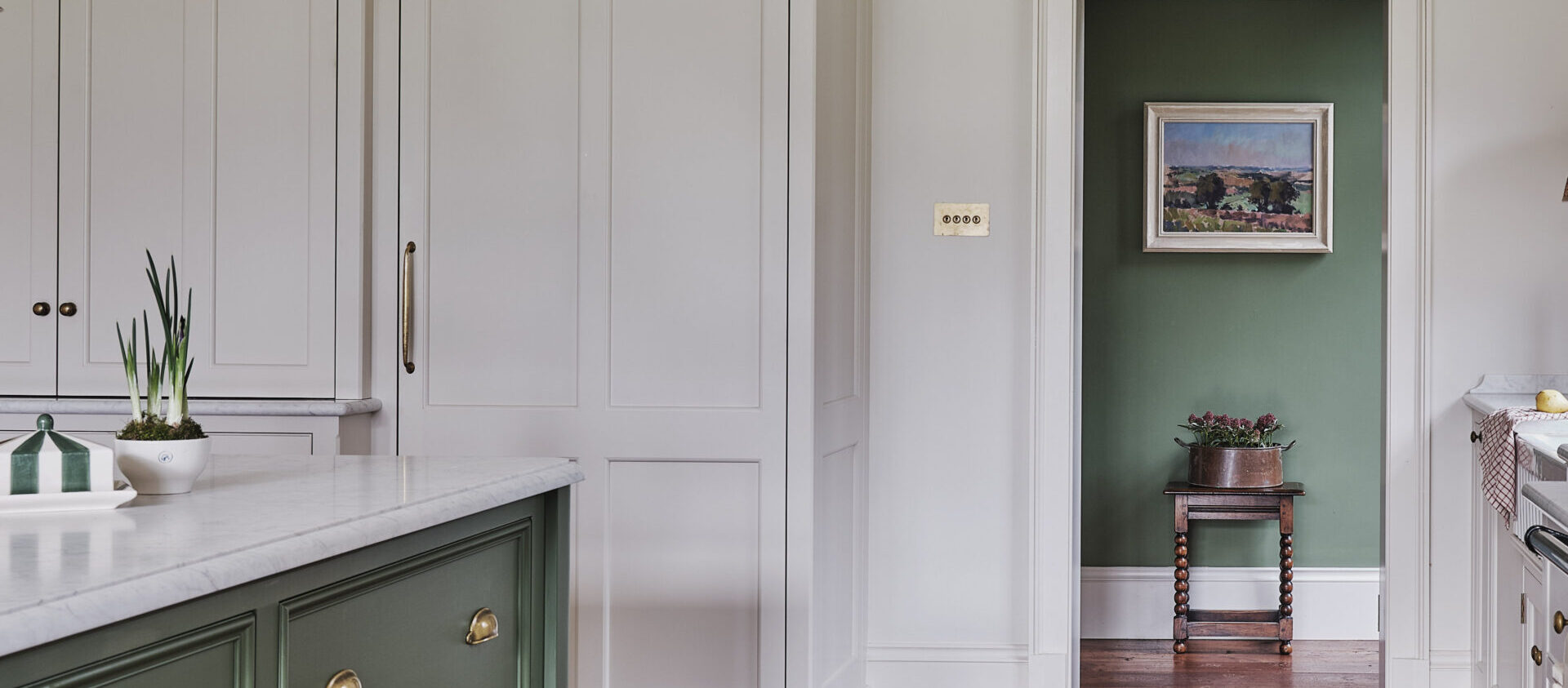
Edwardian Country House Ancillary Rooms
HAMPSHIRE
These ancillary or back of house rooms form part of a large renovation project for an Edwardian country house in Hampshire. Working with renowned architects at Adam Architecture our client has re-imaged spaces throughout the ground floor, opening up rooms now more suited to modern family life.
Taking inspiration from the period of the house, we designed the kitchen and back of house rooms, relocating them to more appropriate spaces. These are quietly hardworking spaces, designed with the same care and architectural respect as the principal rooms of the house. Every detail is considered, proportions that feel right for the building, finishes that will wear beautifully, and functionality that supports daily life.
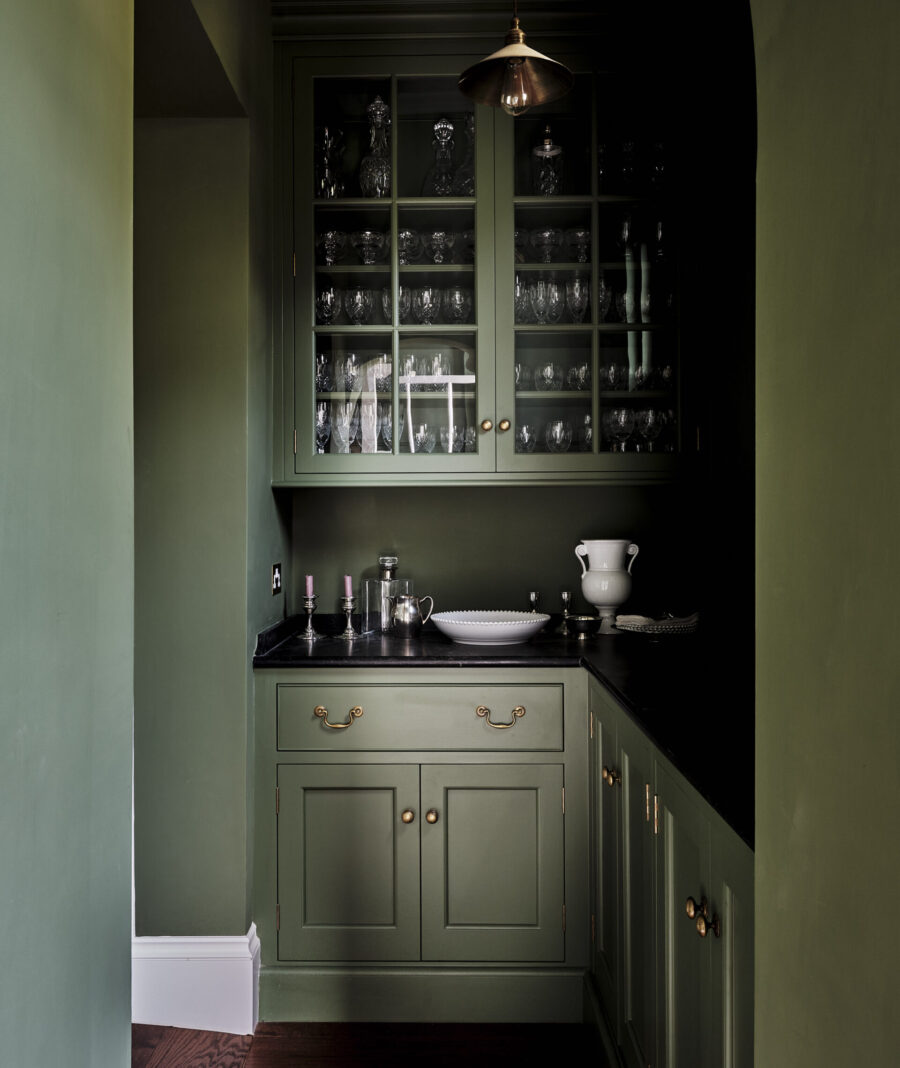
The Back Kitchen
Behind the original drawing room once sat a small boot room and guest cloakroom. As part of remodelling the house these rooms were relocated, and in their place we formed two new ancillary spaces leading from the main kitchen.
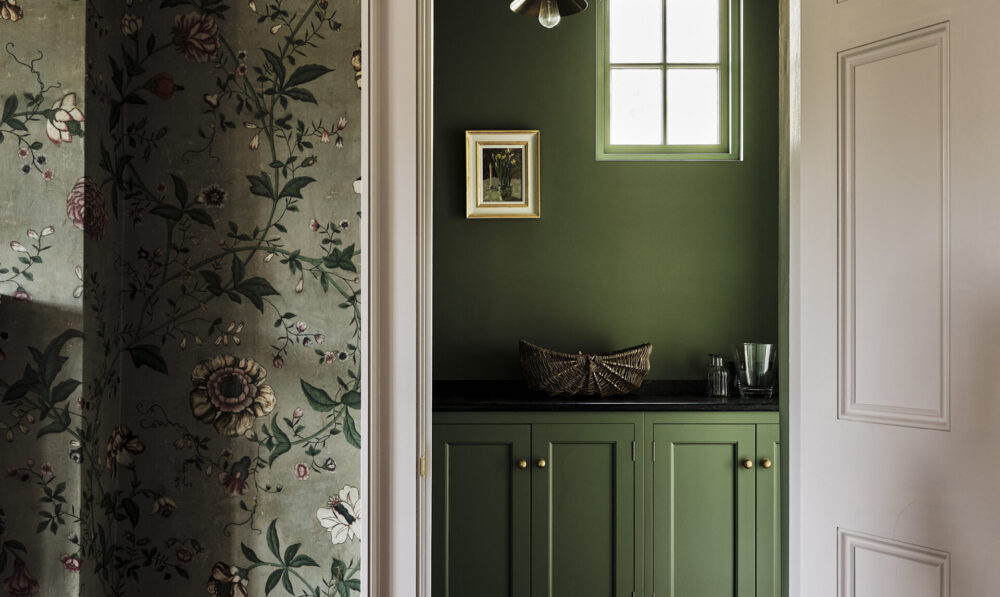
Next to the kitchen where the boot room used to be is now a small scullery or back kitchen.
This little room doubles as a really useful storage area and clearing area when entertaining guests. Ceaserstone Darcrest worktop is a robust surface for this hard working space, coupled with Optimum Brasses handles that coordinate with the same hardware throughout the back of house rooms.
Edward Bulmer’s Fine Green paint has been used on the walls and cabinetry, marrying this room beautifully with the Cook’s Table kitchen island in the main kitchen.
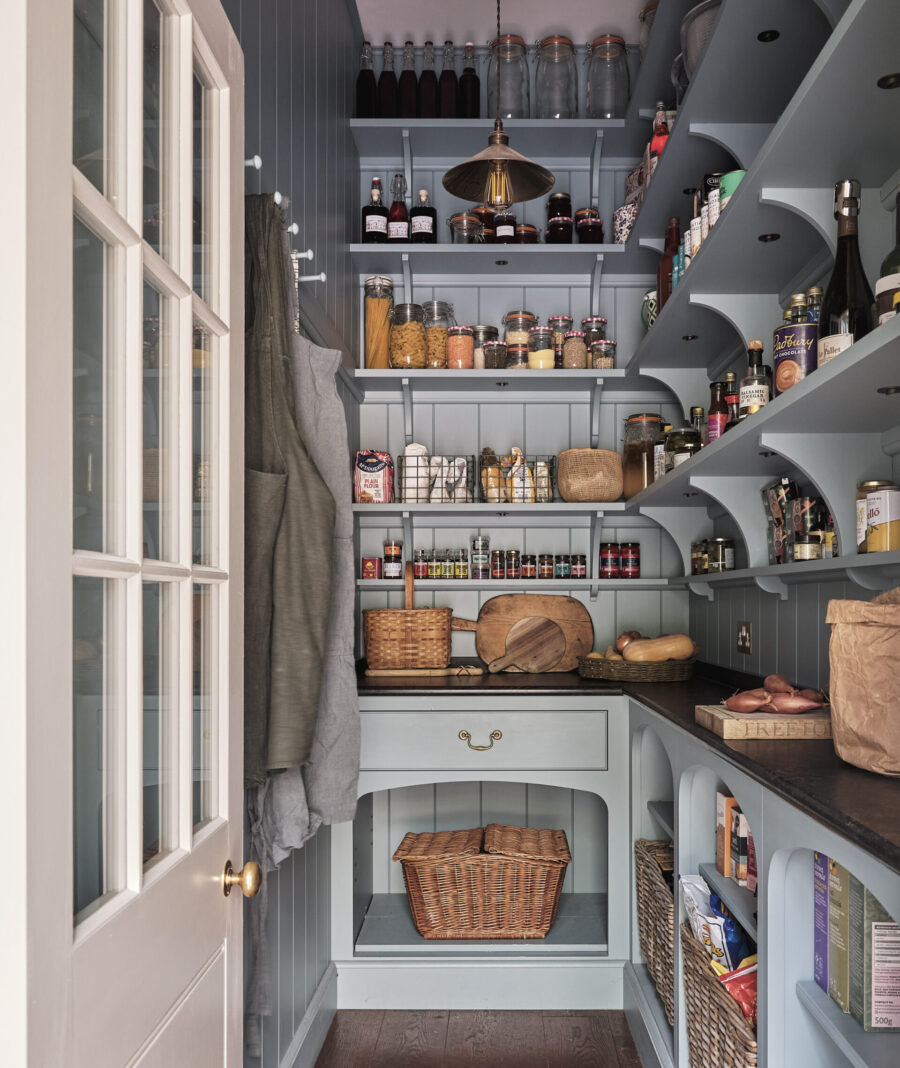
Walk-in Kitchen Pantry
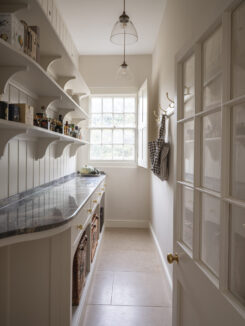
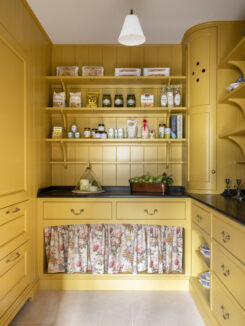
Leading from the back kitchen is a compact and well considered walk-in pantry, providing essential storage space.
The walls are lined in panelled cock and bead boards, a gentle nod back to the work of the estate joiner who would have originally worked in a home of this period. Period homes with traditional back of house spaces such as this were usually panelled in straight boards, offering much needed insulation from the colder brickwork or stone behind.
Painted in rich jewel like shade of Edward Bulmer’s Vert De Mer, it offers a bold contrast to the light-filled kitchen. This a classic walk-in kitchen pantry making good use of a small footprint, with a combination of open wooden shelves and cubbies. It allows the cook to easily see the ingredients on the shelves, while a natural stone work surface keeps food cooler for longer.
Other ancillary rooms that you may like