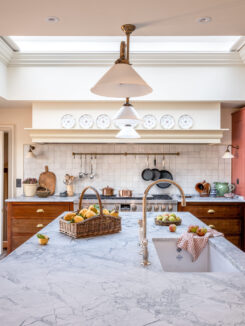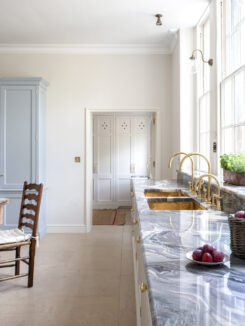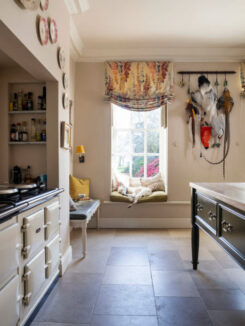
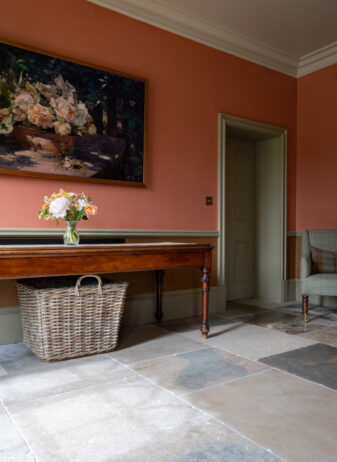
Stone shapes the architectural language of most British buildings; a material which often defines the period of a house, the county in which it sits, and the character of the spaces inside. Artorius Faber, are a third generation family-run stone surfaces company based in Somerset, with over 20 years intimate knowledge of the qualities of natural stone.
They have built their reputation on an unwavering commitment to British natural stone and the craft required to shape it. Their work spans flooring, paving and architectural elements, all made to order and tailored to the individual project. What sets them apart is not simply what they produce, but how they think, an approach grounded in a profound material understanding and respect for the character of the buildings they work within.
Stone, like timber, demands to be understood before it can be used well. Each slab carries variation, nuance and history. Artorius Faber’s strength lies in their ability to read these subtleties by selecting, cutting and finishing stone in a way that feels entirely natural to its setting. Their preference for British stone speaks to a broader philosophy; that the materials of a place should feel as though they belong to it.
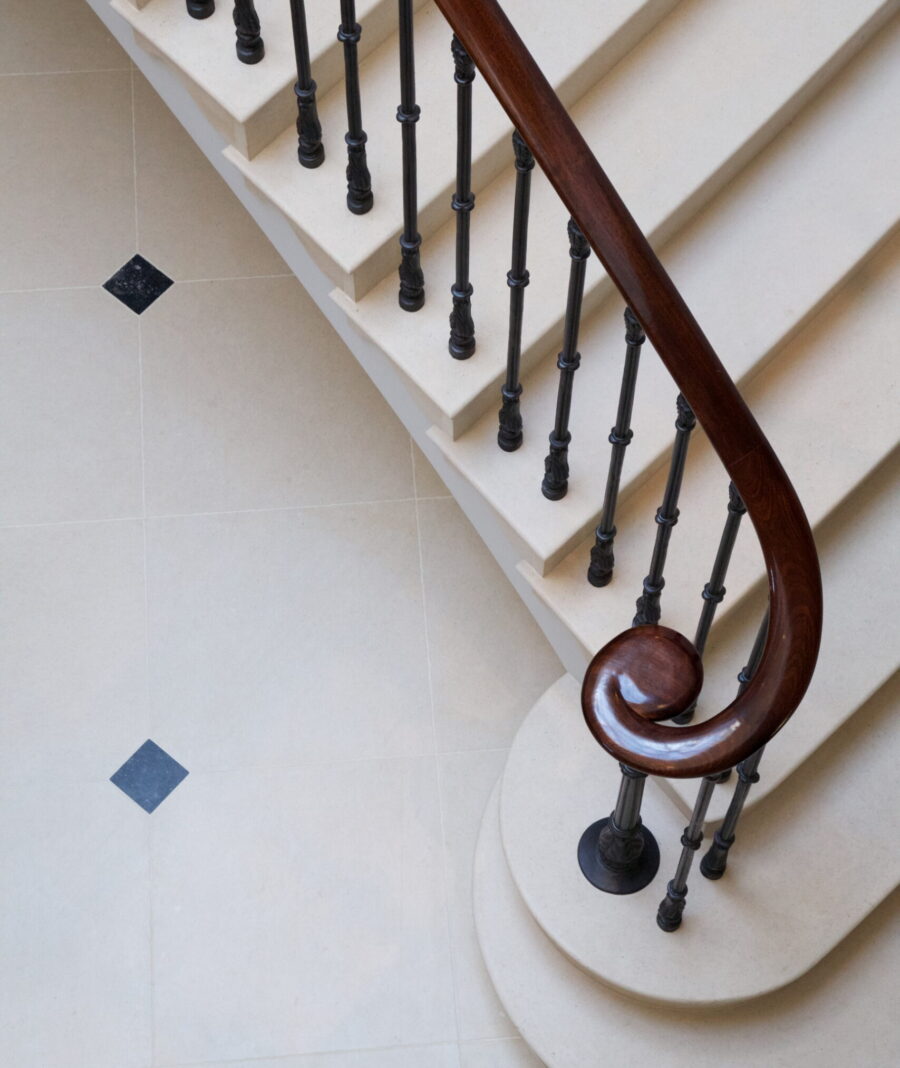
The History of Artorius Faber
From humble beginnings in 1990, Artorius Faber originally specialised in sourcing reclaimed flagstones that could be matched to original stone within existing country house floors. Historically British houses were built from the stone that lay in nearby fields surrounding a property, literally dug from the ground.
Stone readily available in the late 1980s and early 1990s was predominantly imported with slate from Asia, or terracotta and marble from Europe, but demand was steadily growing for UK stone.
Clients began requesting new pieces of English stone that could be used in modern extensions to match existing stone surfaces, or used in larger renovation projects both internally and externally. Artorius Faber recognised this increased demand for traditional British stone, but accessing it proved far more complicated that they thought.
“Purbeck Marble was used extensively as decorative details for churches, but never received the immense and sustained patronage that Italian marble benefited from”
Edward Smith, Artorius Faber
British Stone Quarries
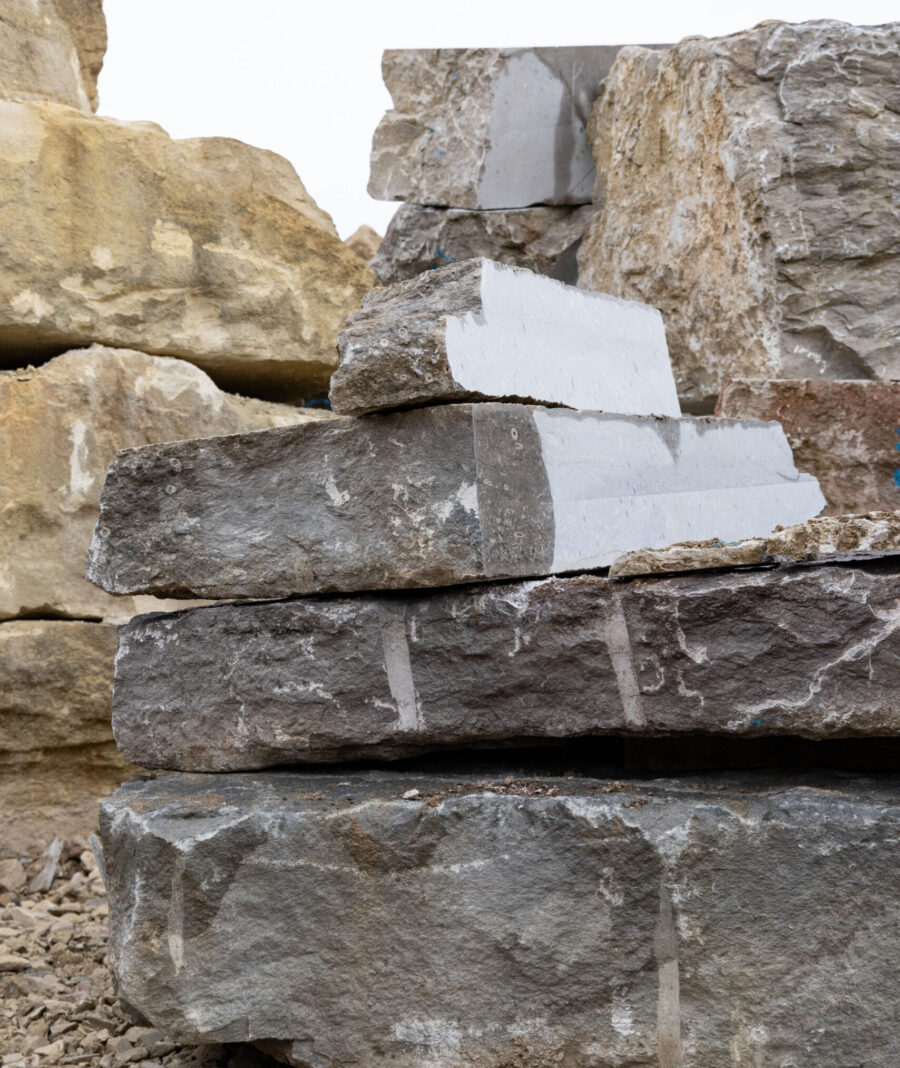
There are over 3000 active quarries throughout the UK. A large number of these extract stone by blasting rock into small pieces, to then be crushed and used as aggregate for farm roads, concrete and tarmac. Only about 10% of what gets extracted ends up cut and polished. It takes years of building good relationships to encourage some quarries to adapt ways of working or even be willing to part with their precious mineral!
Not all quarries were interested in developing a relationship in this way, with only a few willing to adapt. The company now works with around 60 specialist quarries with a focus on limestone, granite, sandstone and slate. With so many variables in each of these stones depending on geographical location, the different finishes, layouts and uses are limitless. Each piece of stone they craft shapes landscape, architecture, and interiors for generations to come, in its own way becoming an integral part of history.
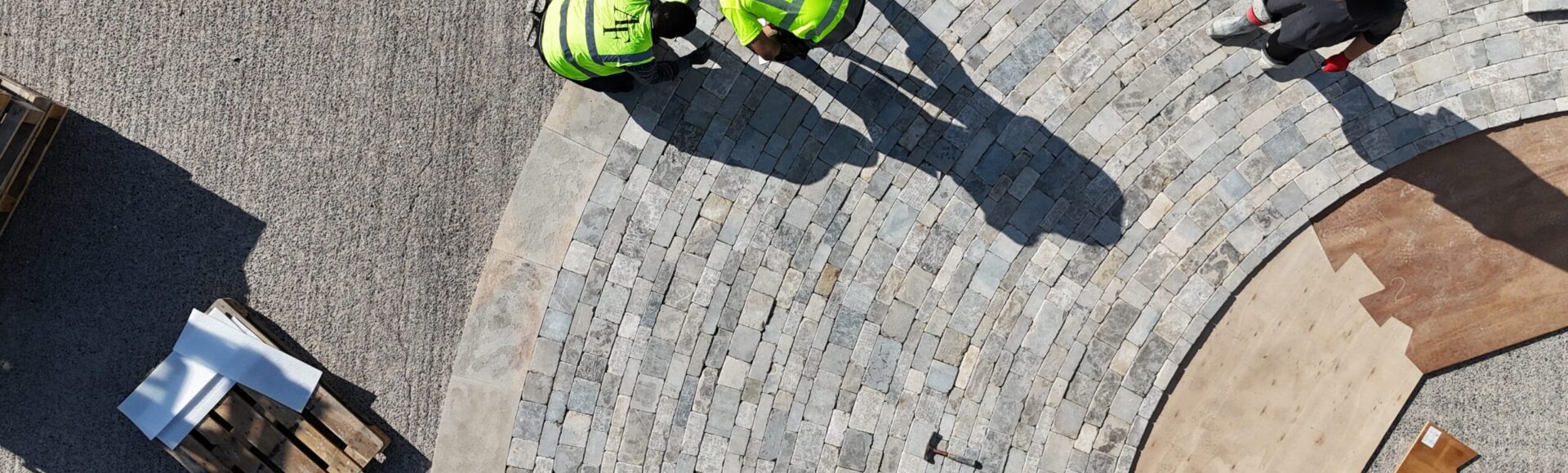
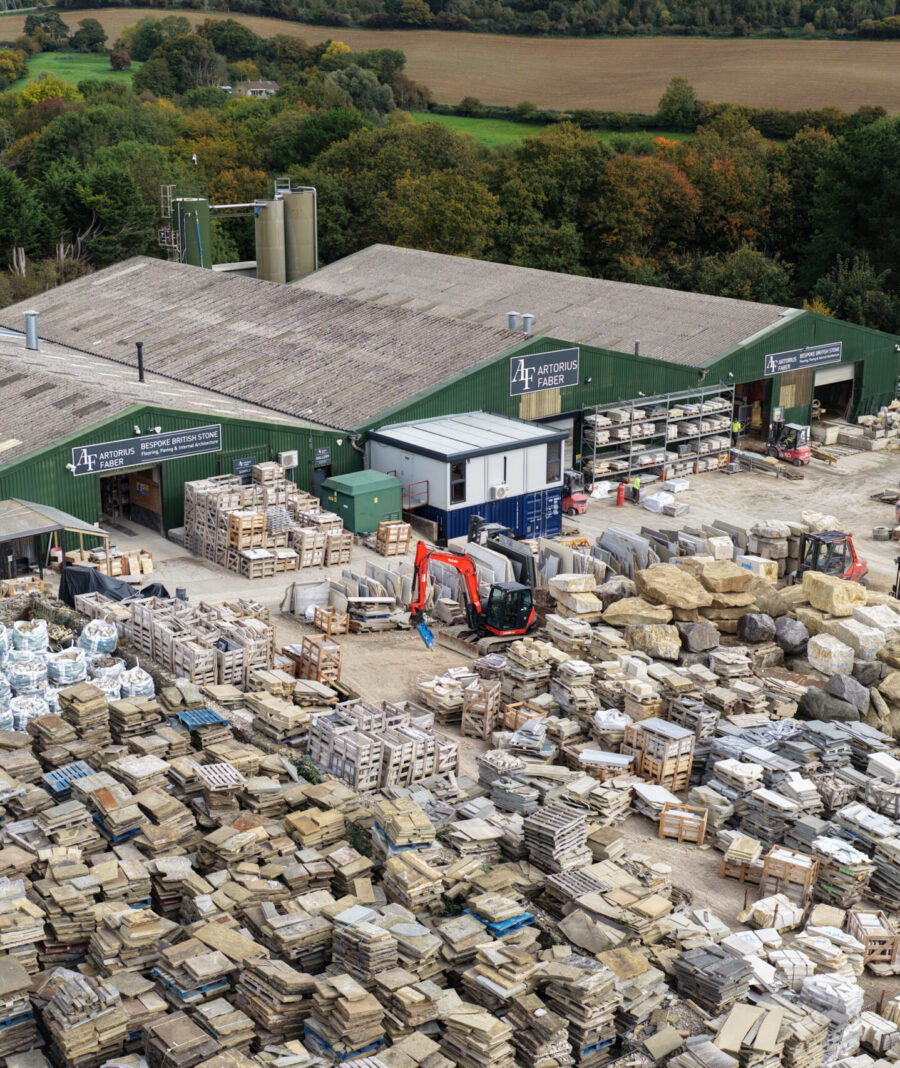
"When you visit Artorius Faber, you will see cutting and shaping first-hand, an enormous selection of stone in our yard, craftsmen at work and examples of our stonework on large panels in the gallery space."
Edward Smith, Artorius Faber
Reassuringly British
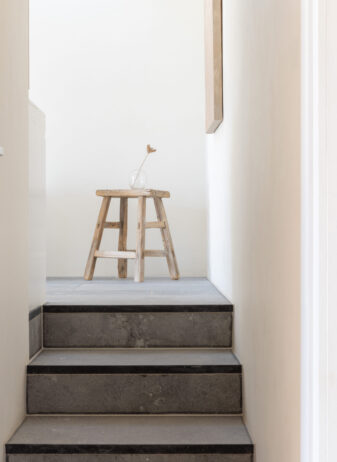
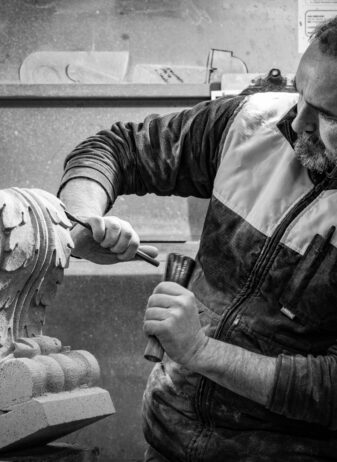
From their Somerset workshops and offices, they oversee the entire process, from sourcing raw blocks from individual quarries through to cutting, finishing and installation.
This level of control allows for a rare consistency and a responsiveness that is invaluable when working within the irregularities of period homes. Uneven floors, shifting levels, centuries of alteration; these are not obstacles, but require a more considered, bespoke response.
There is also something reassuring in their way of working. Like all fine craftsmen, they begin by listening to their clients, working closely with architects, designers and private clients. The result is not a product applied to a room, but a surface that feels entirely integral to it, quietly anchoring everything around it.
“The limestone we quarry is one of the most versatile British stones, equally suited to both interiors and exteriors. Its receptiveness to a wide range of finishing techniques, enables us to create different patinas specifically for individual projects.”
Edward Smith, Artorius Faber
Artorius Faber’s Dorset Quarry
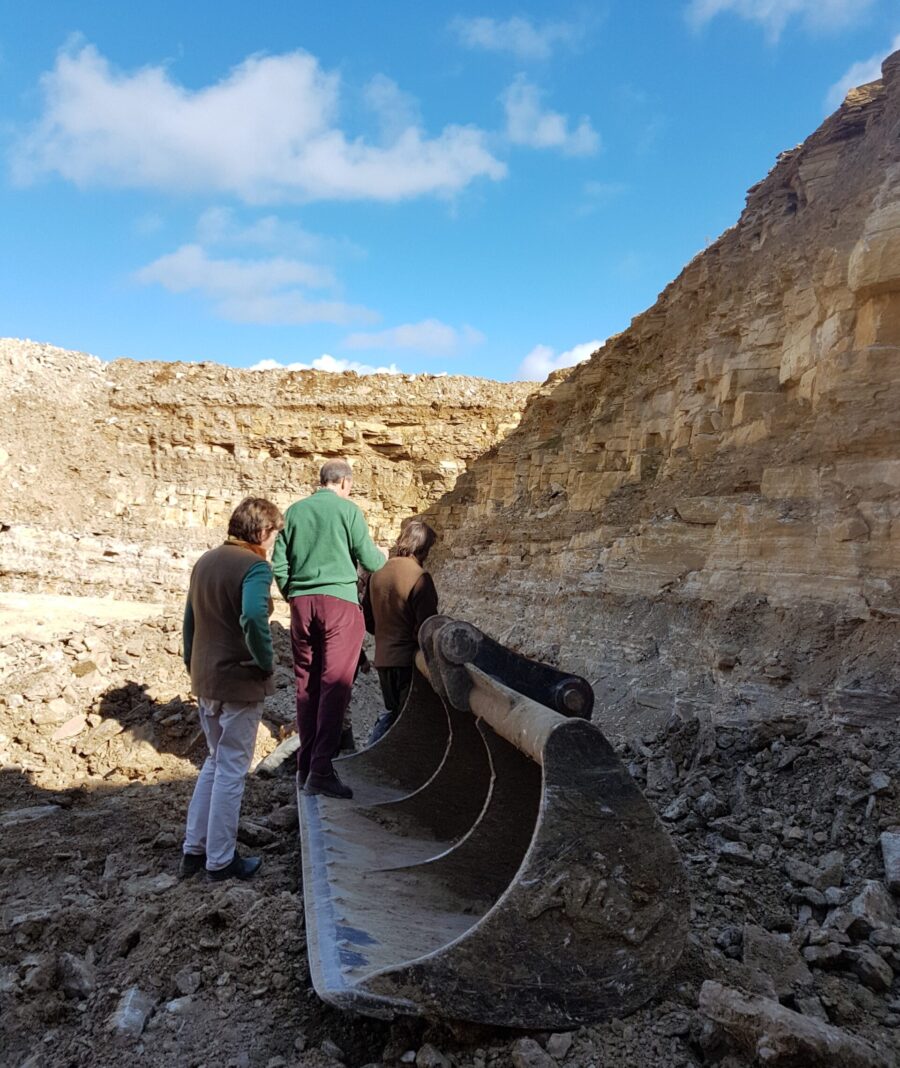
Located in Dorset, Artorius Faber owns and operates its own quarry within a vast landscape protected by the National Trust. Annual excavation rights allow stone to be carefully extracted and managed, ensuring the site’s 17 distinct geological layers are worked with consideration and respect.
This measured approach to quarrying supports the long-term stewardship of the land while providing timeless British stone characterised by its naturally understated beauty.
Limestone is naturally extremely hardwearing and durable, and with so many variables the finishes they can achieve are limitless.
“Working closely with our quarry ensures we have complete control over the source material and maintains both quality and supply for our clients.”
Edward Smith, Artorius Faber
Worldwide recognition of British stone
Exporting worldwide, with a focus on USA, they work with architects and designers with a desire for an understated British aesthetic. In recent years they have exhibited at some of London’s most important interior and garden events.
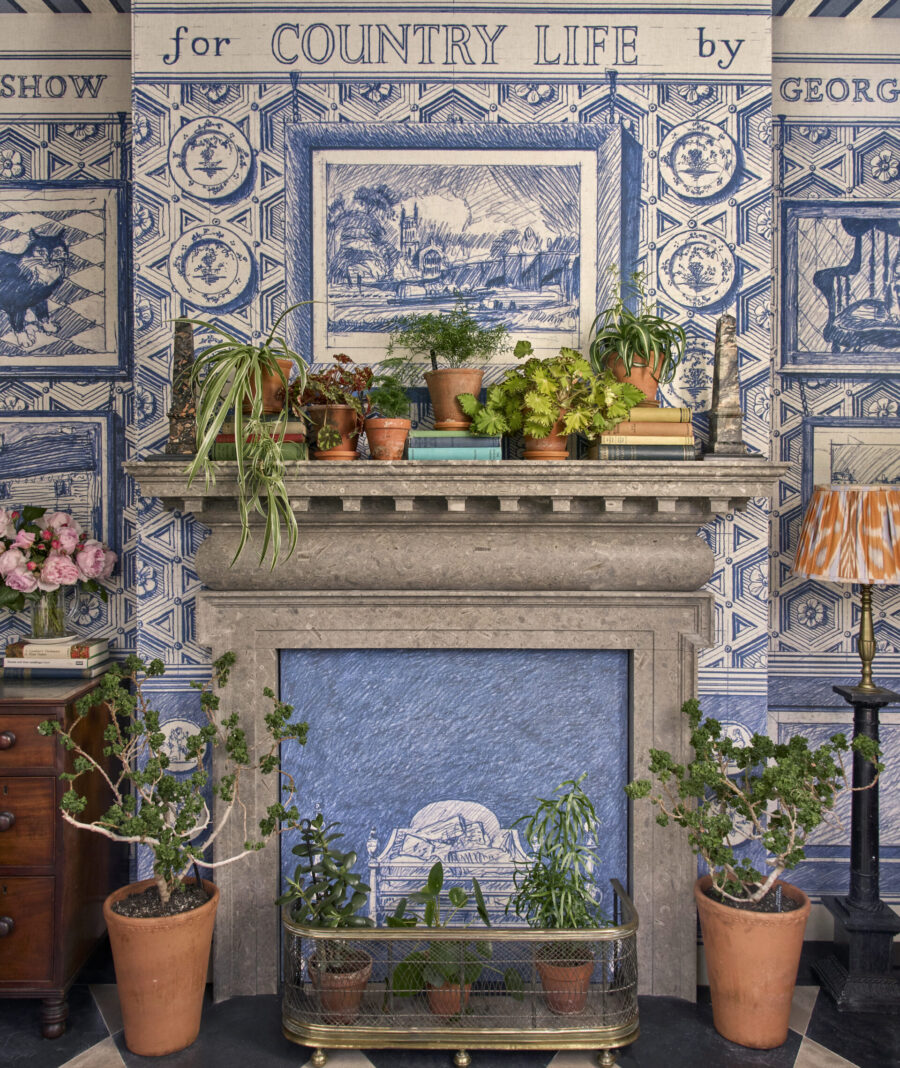
In 2026 they had a presence at both Wow!House and RHS Chelsea Flower show for the second consecutive year. ADAM Architecture director George Saumarez Smith’s design for the floor of Country Life’s stand at the RHS Chelsea Flower Show 2026 was brought to life by Artorius Faber.
While at Wow!House 2026 the Artorius Faber Entrance Garden was inspired by the enduring principles of the English landscape tradition and classical architecture, designed as a place of quiet elegance and permanence.
At Guild Anderson, we often speak about rooms that are “designed to endure.” It is a principle that extends beyond cabinetry as we create spaces that carry a sense of permanence, of belonging, of legacy. Their work carries a distinctly English sensibility too. Not showy, never overworked, but confident in its restraint. In this shared philosophy, it is easy to see why we hold Artorius Faber in such high regard. Their work reminds us that the best interiors are not created through decoration, but through an honest dialogue between materials, craftsmanship, and the houses they inhabit.