Journal
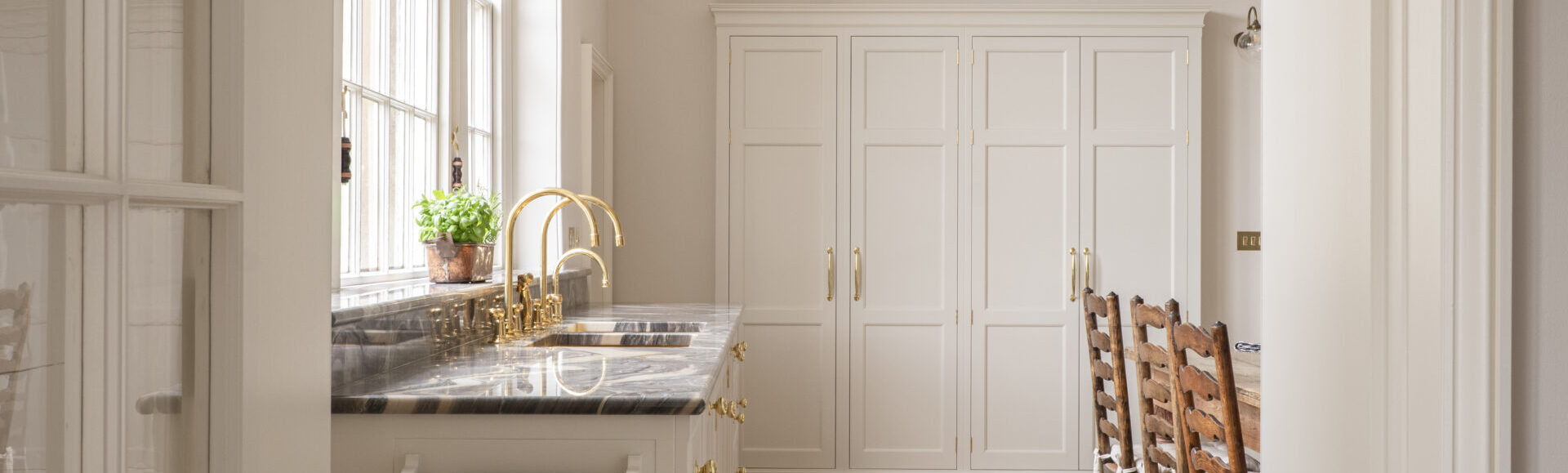
Guild Anderson & The Quiet Discipline of Back-of-House Design
A Modern Interpretation of Estate Cabinetry
February. 2026
On the great English country estate stands a whole hierarchy of houses, from the principle house and the dower house, to estate cottages, farmhouses, labourers cottages, lodges, specialist estate houses (such as gamekeepers cottages and head gardeners houses) and almshouses. They were all designed and built under the unifying principle that each building belonged to the whole, despite the clear social hierarchy expressed in each structure architecturally.
At Guild Anderson, we are guided by these estate principles, and we have made sure that the company is structured in such a way that we possess the flexibility to work in all levels of estate houses, from the keeper’s cottage to the hall. We are not glory hunters in that regard, and we possess the design dexterity and empathy to design for each level of estate house in the way the estate originally intended.
Sympathy with the Architecture
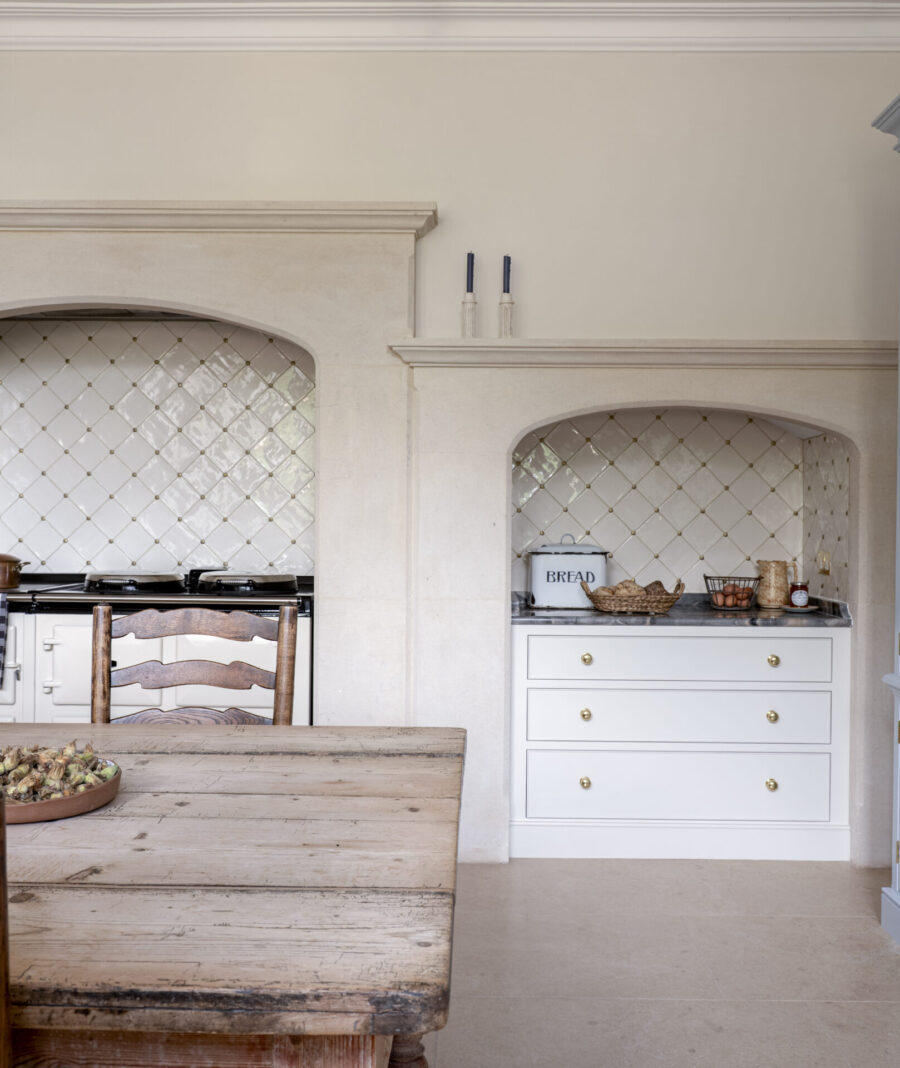
Estate cabinetry begins not with furniture, but with architecture. Every Guild Anderson project starts by reading the house itself such as its proportions, period details, materials and rhythms. Cabinetry is not imposed upon a space; it grows from it.
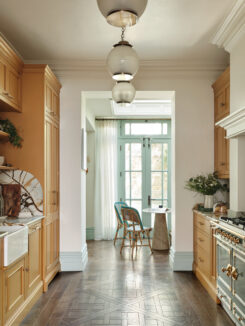
Cornices compliment existing mouldings, door styles echo original joinery, and layouts respect the logic of the building rather than contemporary trends. Whether working within a Georgian rectory, a Victorian manor or a restrained new build modern country house, the cabinetry feels inevitable, as though it has always belonged.
This architectural sympathy ensures that the rooms sit quietly within the house, reinforcing rather than competing with the structure around them.
Materials Rooted in the English Countryside
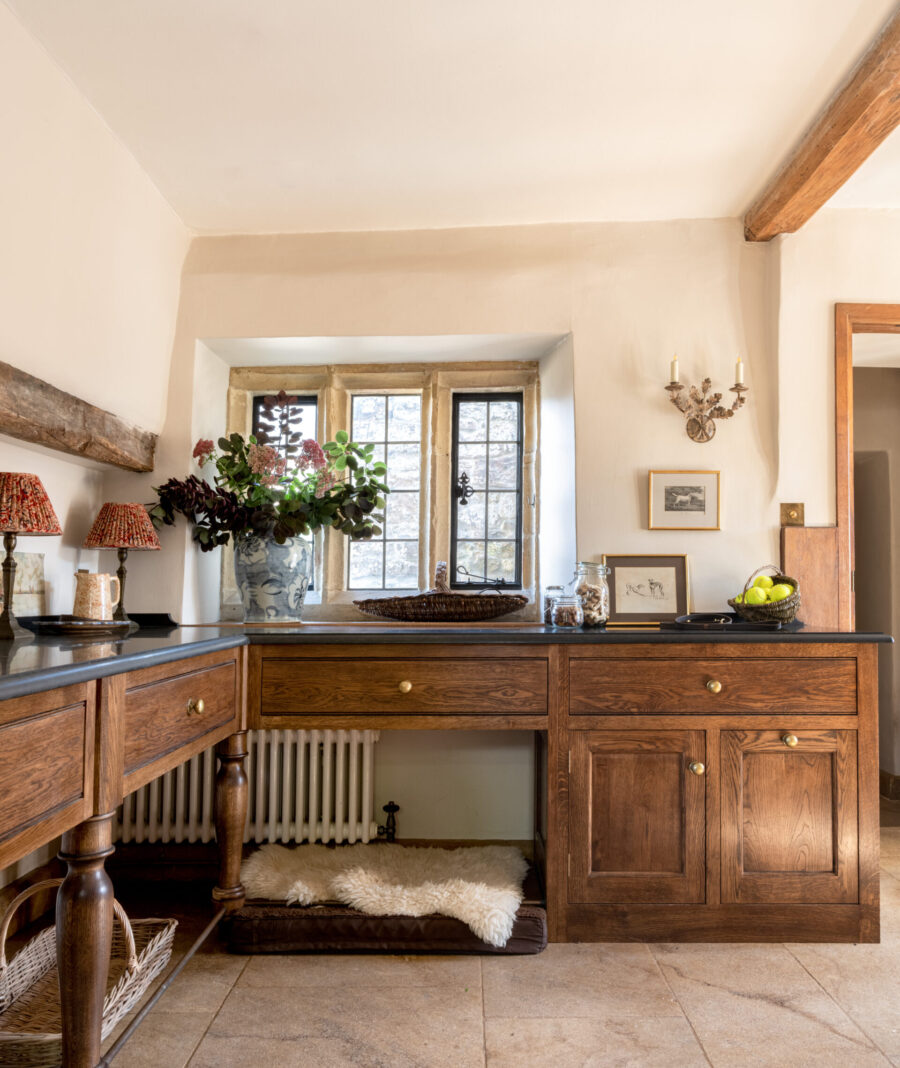
Material selection is fundamental to the estate cabinetry approach. Historically, estate joiners worked with what was locally available such as solid timbers, natural stones, lime plasters and metals that aged gracefully.
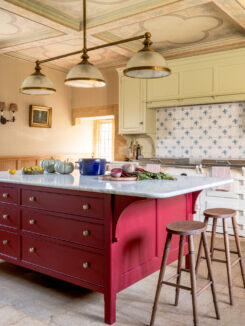
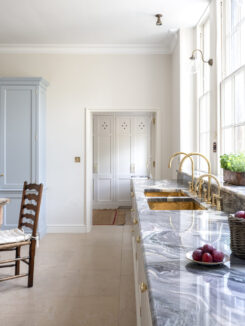
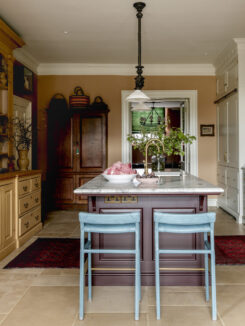
Where possible, Guild Anderson continues this tradition with a preference for natural, honest materials. Solid hardwood frames, hand painted finishes with depth, stone worktops, unlacquered brass and aged timbers all contribute to rooms that feel grounded and authentic.
These materials are chosen not only for their appearance, but for how they wear. Patina is welcomed and age is anticipated. The cabinetry is designed to improve with use, not to be preserved behind careful living. It’s designed to take knocks.
"Regardless of stature, the most revealing rooms for us are not the grand halls or formal drawing rooms, but the working spaces that support daily life: kitchens, pantries, boot rooms and sculleries. Historically, these rooms were the domain of the estate joiner, and crafted with rigour, longevity and an understanding that function and beauty were never mutually exclusive.
This philosophy has been re-examined and re-applied by us for contemporary living. The result is a modern approach to estate cabinetry that is deeply rooted in tradition, yet confidently relevant to today’s homes."
Andrew Petherick, Business Development Director
Where Practicality Equals Aesthetics
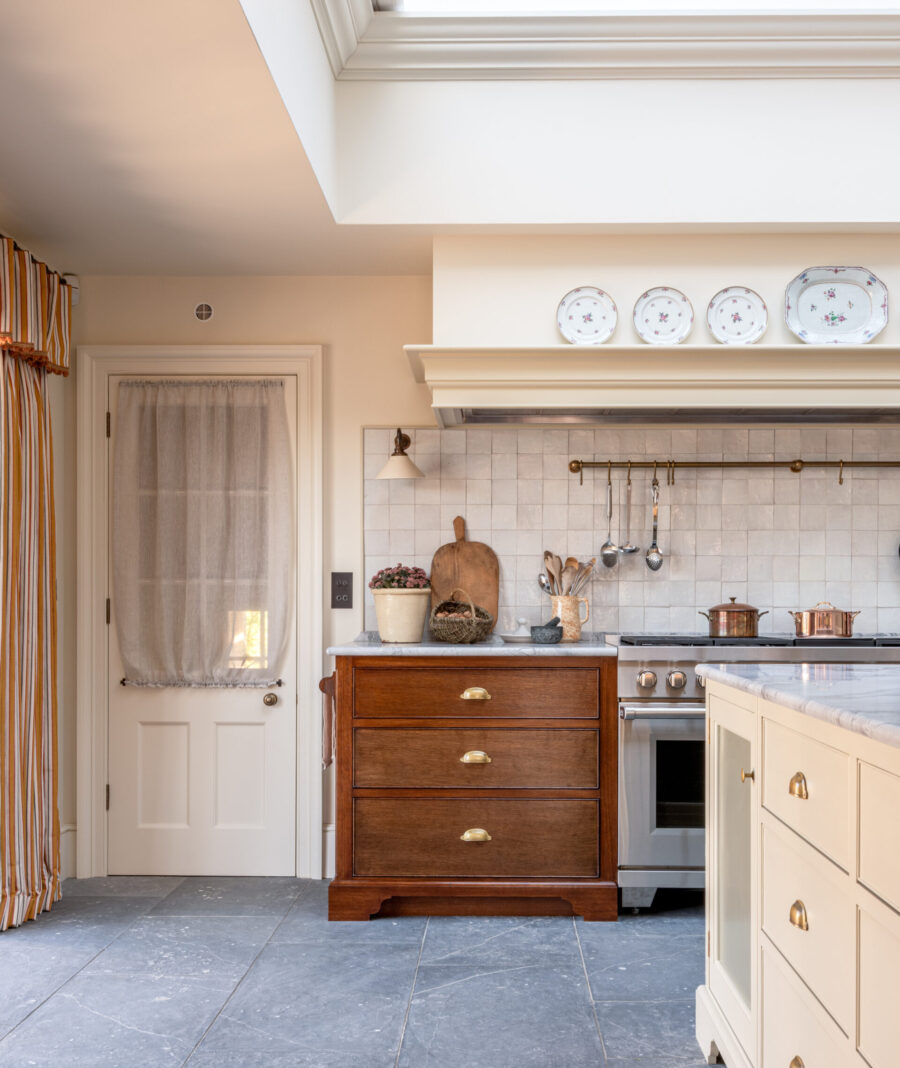
In estate cabinetry, usefulness is not a compromise. It’s the starting point.
Guild Anderson designs rooms that work hard: generous storage, logical zoning, durable surfaces and thoughtful ergonomics are considered as carefully as visual balance. Pantries are designed to store food properly, drawers are sized for real objects, and circulation is planned around daily routines.
Crucially, this practicality is never visible as compromise. A well-proportioned drawer, a robust door thickness or a stone floor chosen for longevity all contribute to the visual calm of the space. When something functions correctly, it usually looks right.
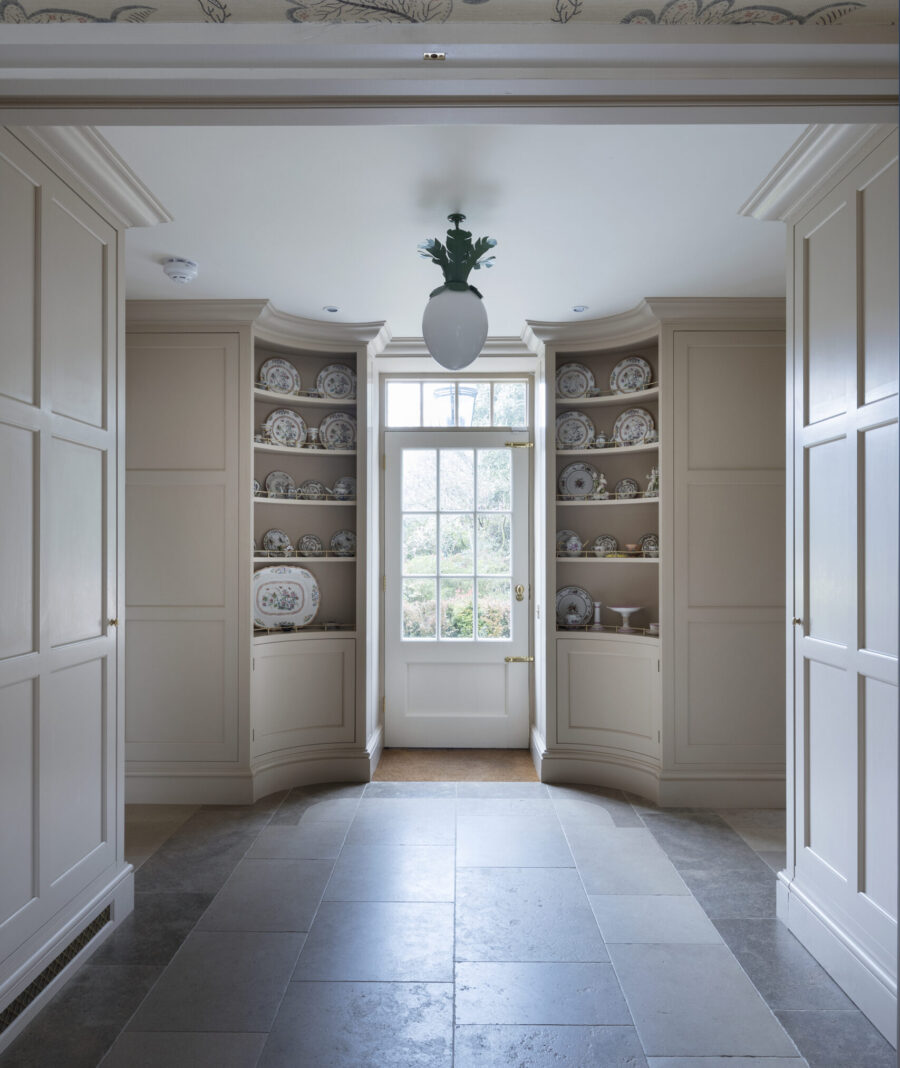
Built with the Integrity of the Estate Joiner
Perhaps the defining principle of estate cabinetry is integrity. Historically, the estate joiner built not for fashion, but for service, often knowing the work would outlast him.
Guild Anderson carries this responsibility forward. Cabinetry is constructed with traditional methods, robust materials and an attention to detail which prioritises longevity over speed. Interiors are finished with the same care as exteriors, and nothing is designed to be disposable.
This integrity is felt rather than seen. Doors close with weight, proportions feel settled, and the rooms possess a quiet authority that comes only from well-made things.
Guild Anderson’s modern estate cabinetry is not nostalgic. It does not replicate the past, but it learns from it, applying its lessons to contemporary living with clarity and discipline.
In an age of fast interiors and visual excess, our approach offers something increasingly rare: rooms that are calm, useful and enduring. Spaces designed not to impress at first glance, but to serve a household for generations. That, ultimately, is the essence of estate cabinetry, and Guild Anderson stands as its modern standard.