Country House Kitchens Must Be Traditional in Every Detail — Except When They’re Not
Traditional Country House Kitchen Design
September . 2026
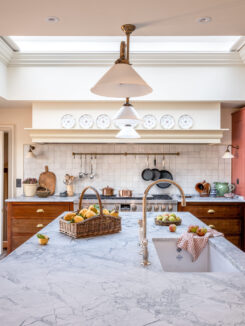
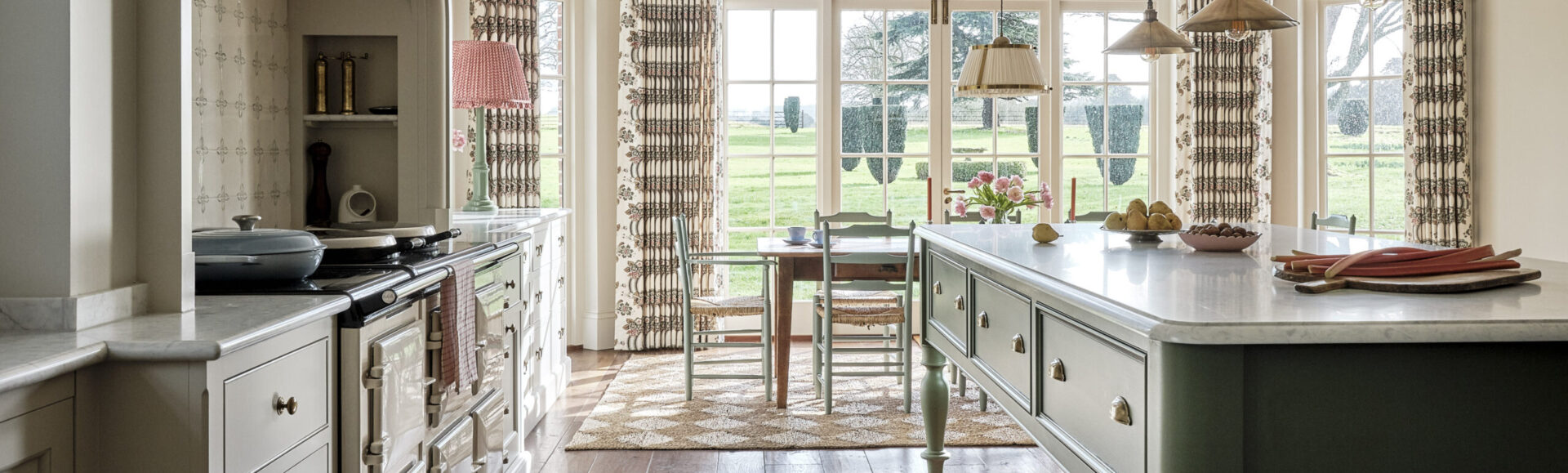
There are comforting visual markers that often define a traditional “Country House Kitchen”; a wooden beam, a range cooker, a Butler’s sink, a well stocked pantry. The quietly reassuring weight of tradition achieved through a room that has evolved over generations of use.
Many assume that to achieve the authentic look or feel of a traditional country house kitchen then one must copy the past by introducing an historic cupboard, a moulding or cornice, a centuries-worn paint colour, but the truth we live by at Guild Anderson is that copying history is almost the least authentic thing you can do. To replicate history risks creating a stage set rather than a living, breathing kitchen that truly belongs to the house and the people who inhabit it.
For us, authenticity is about respect for the character of the home, its architecture, and the life that unfolds within its walls today. A kitchen is the heart of the home, and a country house kitchen must feel timeless. But timeless does not mean frozen in time. Rather, it is about creating spaces that blend heritage and modernity so seamlessly that they appear as though they have always belonged.
What Authenticity Is, and What It Isn’t
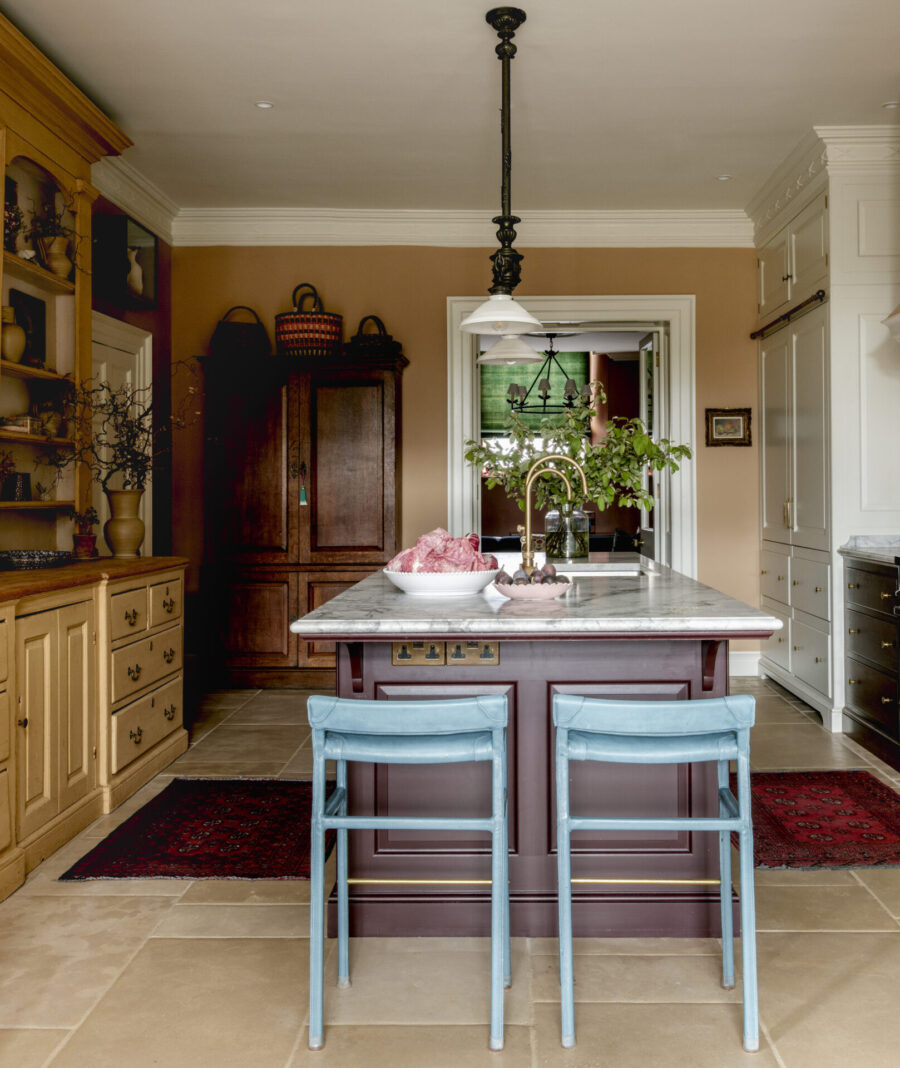
Authenticity is not mimicry. It isn’t about replicating styles slavishly by producing an exact Georgian veneer or pasting a “classic” Shaker facsimile without thought for the house, or the way its occupants live now. When you copy the past without reconciliation, you risk creating a decoration, not a home. A stage set rather than something lived in.
In contrast, authenticity comes from a different kind of respect: respect for the character of the house; for the scale and proportion of its windows, ceilings, fireplaces; for the light that comes in across a morning; for the practical ways a family uses space now. It comes from designing with humility, by letting the architecture speak, and then letting the kitchen respond.
We believe that in a country house the kitchen should belong both to the architecture of the past and to the needs of the present.
Tradition in Every Detail. Tradition Reinterpreted
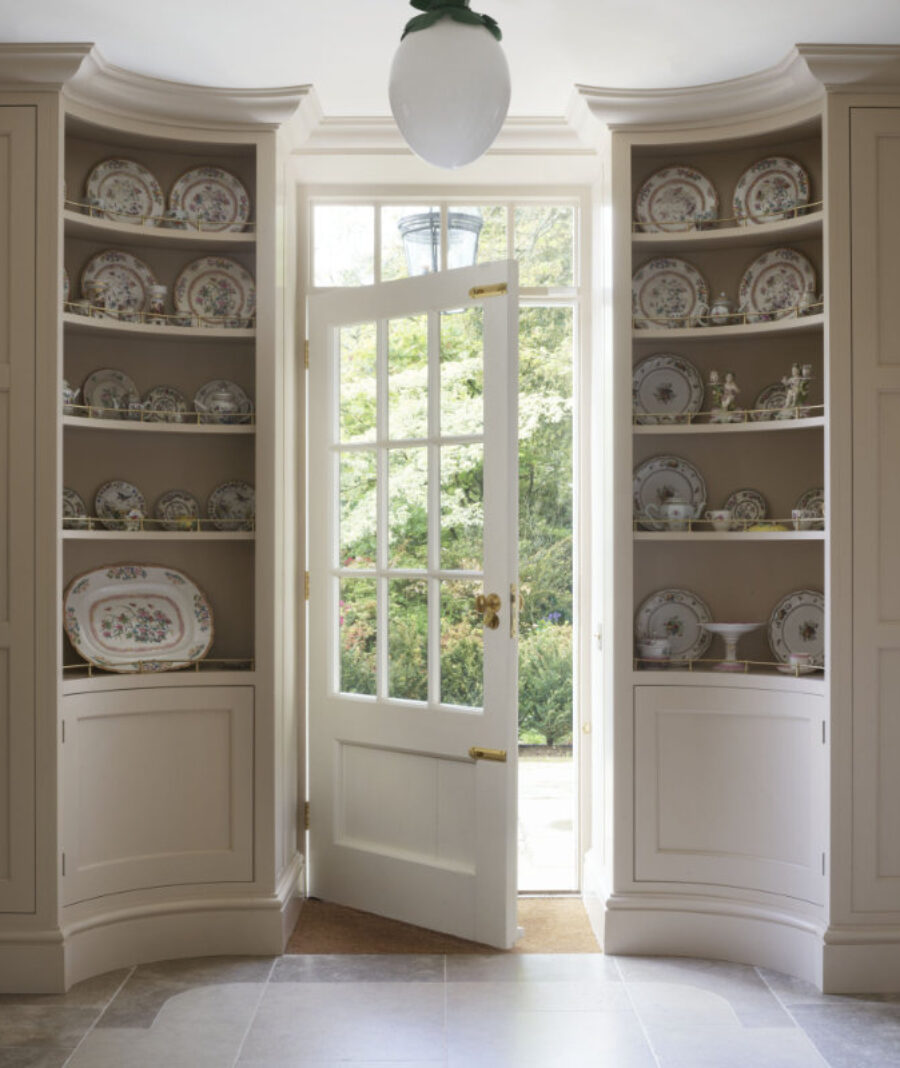
When we talk of tradition in every detail, we do not mean humbly copying decorative motifs or prescriptive styles, It is about the enduring values of estate cabinetry. What tradition means in our work is this:
- Scale & Proportion: how wide a door should be, the height of a cornice, the width of a rail or stile. These are subtle, but they make or break whether something “feels right” in a room. They are what traditional estate joiners once judged by eye, and what still matter just as much now.
- Materials & Craftsmanship: solid hardwoods, hand finishes, careful joinery, furniture-making that endures. Tradition in detail means hardware that ages well, paint that wears, drawers that open and close with precision. Not mass-manufactured veneers that look “traditional” but feel synthetic.
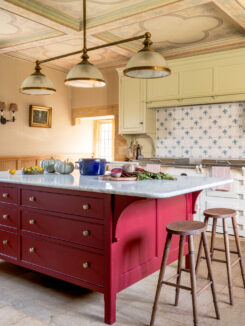
- Architectural Sensitivity: respecting the house’s bones. If you have Georgian windows, or an uneven ceiling, exposed beams, or a stone floor, then let those guide the design. The kitchen should respond to those features, not fight them. Proportion, shadow, light, height and perspective matter.
- Use & Life Today: tradition doesn’t mean resisting change. It means integrating modern appliances, plumbing, storage, lighting, surfaces, all in ways that work for modern family life, but done so that the modern feels seamless, not tacked on.
Why Copying the Past Is the Least Authentic
- It erases what is unique in the house. When you paste in detail just because it was “period appropriate,” you often lose what is unique: quirks of structure, irregularities, patina, traces of previous alterations. Those things give a building soul. Copying generic “past” details tends to flatten out identity.
- It ignores present usage. People don’t live as they did a hundred or two hundred years ago. Our routines, technologies, expectations have shifted. For example, the places we need to store things, the kind of cooking we do, lighting, ventilation. A kitchen should support present needs; otherwise it becomes a beautiful display but not a joy to live in.
- Past styles themselves evolved. Many period components were themselves adaptations of technology, or fashion, or materials available. Traditions were never static. The Georgians didn’t copy the Tudors, they designed for their own time. So copying one snapshot may feel inauthentic when the house or its surroundings had evolved naturally. Your kitchen should be part of that evolution, not frozen retrospectively.
Belonging: Architecture + Life + Material
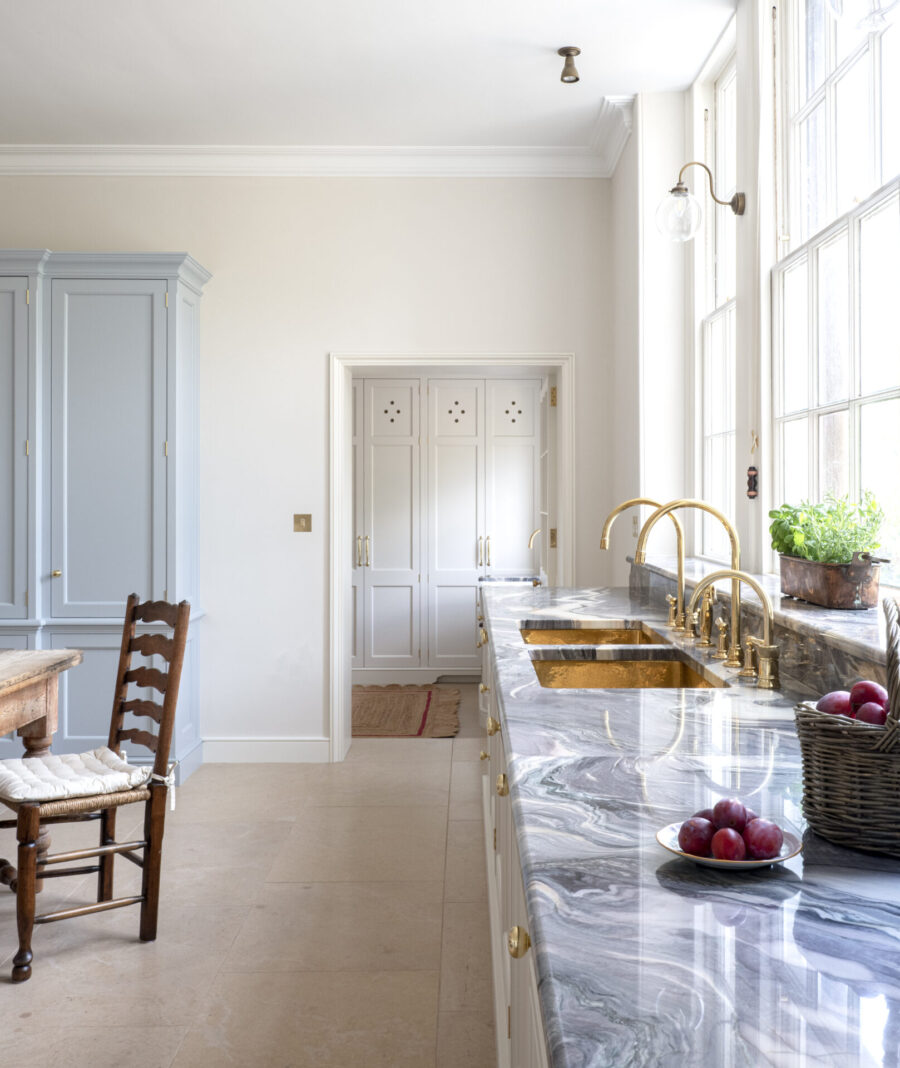
We at Guild Anderson see that a truly authentic traditional country house kitchen comes from the intersection of three things:
The House’s Character. Its history, proportions, materials, vernacular details, the way its rooms flow, how light moves across surfaces.
How You Live Now. Your family’s rhythms; food, entertaining, quiet breakfasts; the appliances you need; how storage works for you; how busy your kitchen will be. These inform layout, materials, finishes.
Durable, Beautiful Making. Good quality materials, considered detailing, finishes that age gracefully, elements that ensure the space feels patinated over time, that it collects stories, rather than looking contrived.
When these three are in balance, you achieve something timeless. A kitchen that feels as if it has always belonged, yet is utterly fit for the way you live now.
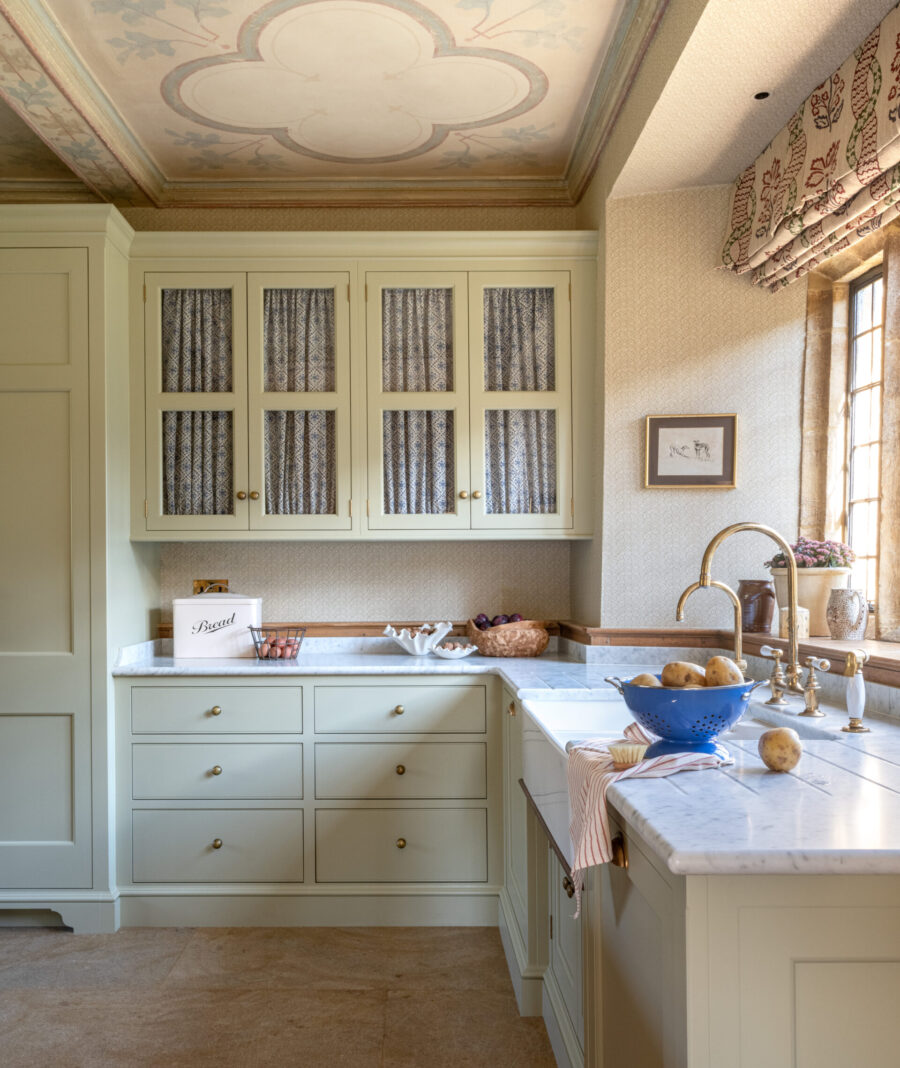
Respecting the House’s Character
Every house has a voice, and our work begins by listening carefully to it. The proportions of the rooms, the quality of light, the rhythm of the architecture, these elements guide our design decisions more than any historical template ever could.
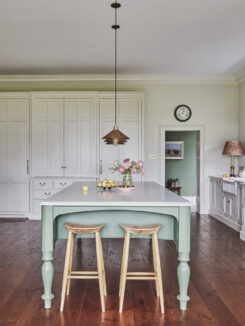
In a Cotswold manor, this might mean cabinetry in soft, muted tones that echo the honeyed limestone walls outside. In a Georgian rectory, it could involve subtle classical detailing that feels sympathetic to the building’s elegance without overwhelming it. In a Victorian farmhouse, the solution may lean towards honest, functional joinery that honours the spirit of utility and durability.
The key is not to impose history upon a house, but to draw inspiration from its character. This approach ensures the kitchen feels like a natural continuation of the building rather than an addition parachuted in from another era.
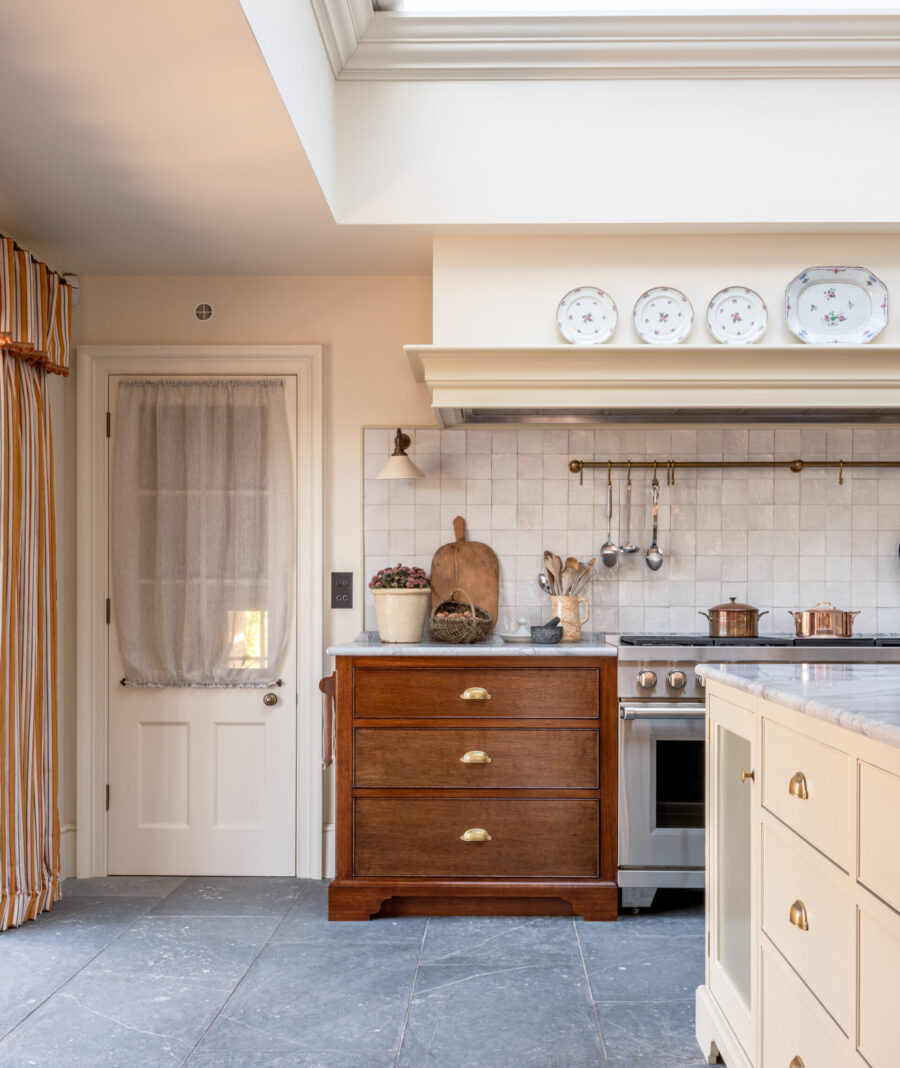
Timelessness Is Not Antique
Timelessness is not the same as antique. A room that feels timeless doesn’t feel like a museum piece. It breathes. It is used, it is slightly worn in, and it shows its life. The patina of hands, the scuffs from boots, the glow of years.
A kitchen must be practical, efficient, and comfortable for modern life. Country houses are no longer run by legions of staff; they are lived in by families who cook, eat, entertain, and gather in these spaces. To insist on traditional layouts or outdated features would deny the way we live today.
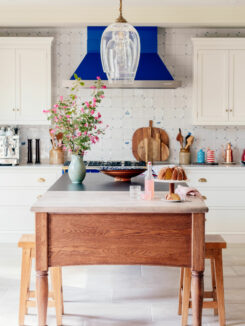
Instead, we create kitchens that respect history while embracing modern life. This could mean integrating discreet appliances within bespoke cabinetry, ensuring state-of-the-art functionality without disrupting the room’s harmony. Or it might involve designing an island that doubles as both prep table and family gathering point, something no 18th-century kitchen ever had, yet which now feels utterly at home in the modern country house.
We believe that when a kitchen supports the daily rituals of its household, it naturally develops that sense of ease and timelessness people often describe as ‘authentic.’
Ultimately, the measure of a successful country house kitchen is whether it belongs to the house, to its architecture, and to the life lived within it. A truly authentic country house kitchen does not announce itself as ‘traditional’ or ‘modern.’ Instead, it feels as though it has always been there, quietly supporting the daily routine while echoing the house’s history.
At Guild Anderson, we are the modern heirs of the estate joiner; trusted craftsmen who once shaped the unseen infrastructure of great houses. Where others create showpieces, we design the hard-working rooms that sustain family life, by listening to a house and responding thoughtfully to its character, we design kitchens that are timeless, not because they imitate tradition, but because they embody it in a way that feels alive, relevant, and enduring. True authenticity comes not from looking back, but from carrying forward the values of craftsmanship, respect, and harmony with place. That is what makes a kitchen timeless, and that is what makes it belong.