Journal
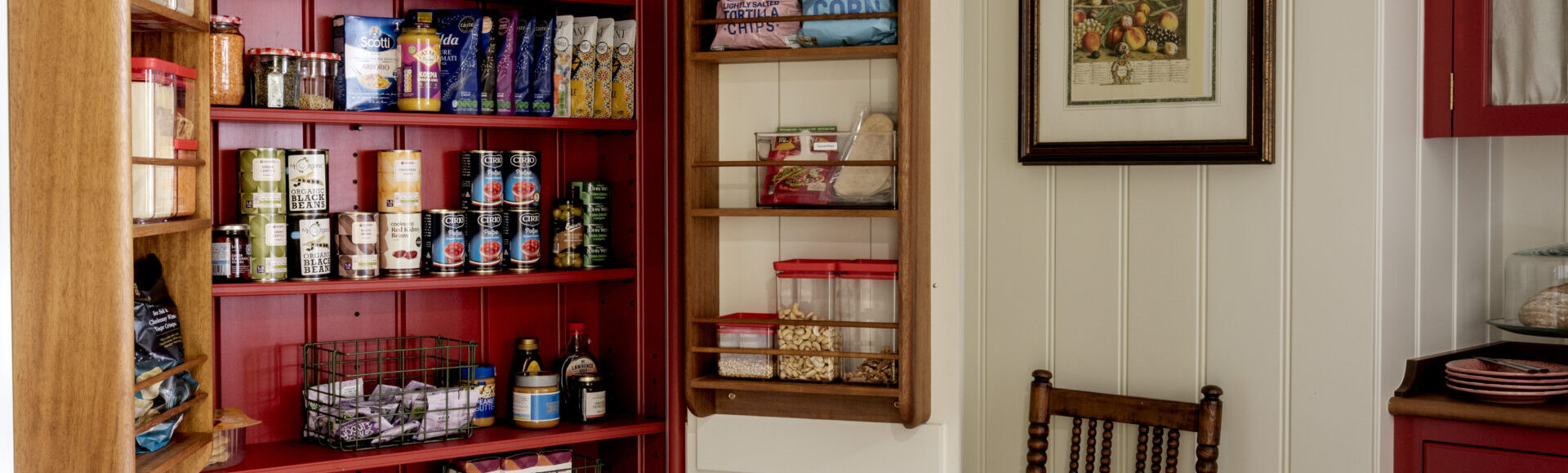
The joys of a well organised walk-in, step in or larder cabinet
The Kitchen Pantry: From Festive Overflow To Everyday Ease
December. 2025
Christmas has a way of testing a kitchen. Extra guests, special ingredients, trays of mince pies and the ceaseless hum of small appliances can tip even a well-planned room into chaos. A walk-in kitchen pantry or larder cabinet absorbs the swell, then continues to serve you quietly in January, when everyday cooking returns.
Historically, larders and pantries were nineteenth and early twentieth century service rooms, separate from the family kitchen, where provisions were stored on cool stone or slate with limited daylight and plenty of ventilation. Staff managed stocks, decanted dry goods and staged service away from view. Today, you still want the calm and order those rooms provided, but with thoughtful detailing, integrated power, and finishes that sit comfortably within a family home.
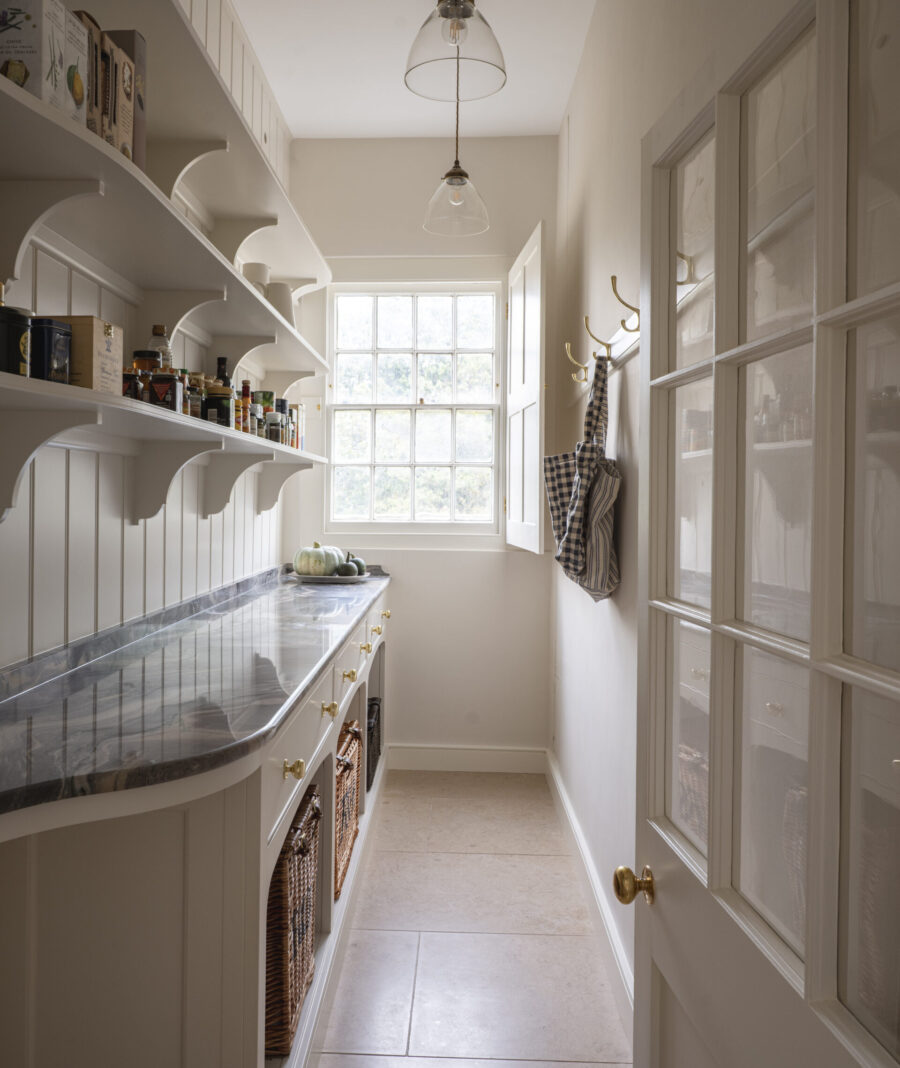
Walk In, Step In Or Larder Cabinet, What Suits My Space?
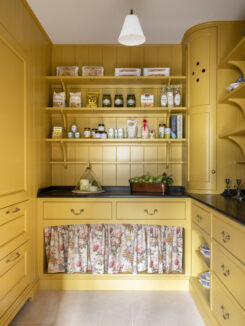
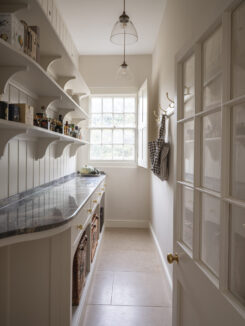
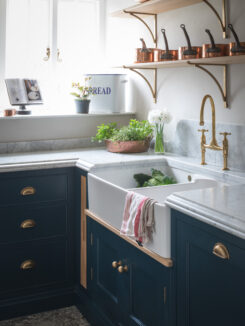
Walk in pantry: It’s best if you can dedicate a small room or annex, ideally 1.5 m by 2 m or larger so two people can pass. It gives you perimeter shelving, work surface and space to park appliances, with the door closed when guests arrive. The pantry can also host a secondary sink and concealed refrigeration.
Step in pantry: A shallow, enclosed niche that you can step into by a pace or two, often 1.2 m to 1.5 m deep. This is excellent in terraced houses or kitchen extensions where you want substantial storage but cannot spare a full room. Think three sides of shelving, a modest counter and well-planned power.
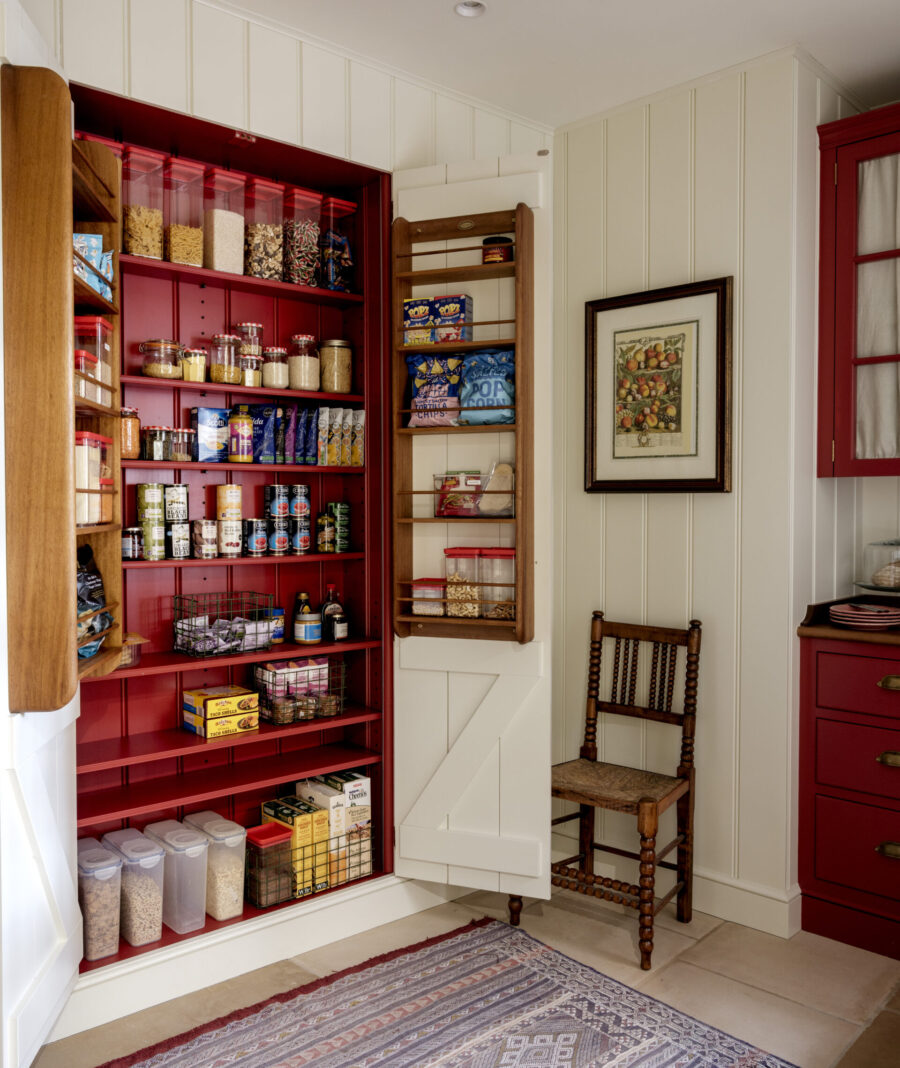
Larder cabinet: A full height, furniture like cupboard within the kitchen run itself. With pocket or bi fold doors and internal worktop, it is ideal for baking essentials, cereals and daily snacks. It suits compact kitchens or as a partner to a cook’s table where quick access matters.
If you are renovating your house, a kitchen with a walk-in pantry creates the most flexibility for entertaining. In tighter plans, a well-built larder cabinet beside the prep zone can be transformative, especially when it contains task lighting, oak door racks and drawers that fit the type of produce you buy.
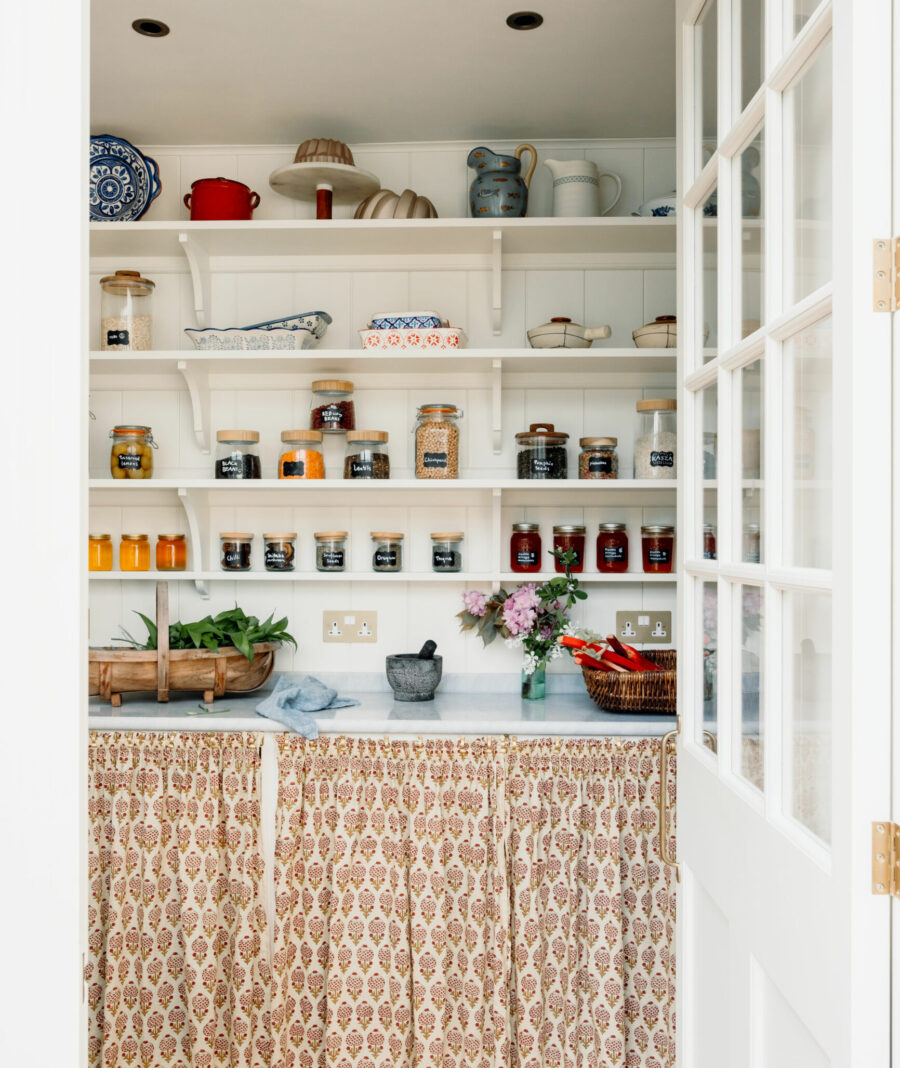
Shelf Depths That Work For UK Tins, Jars & Appliances
Sizing shelves to the goods you actually buy avoids dead space and double stacking.
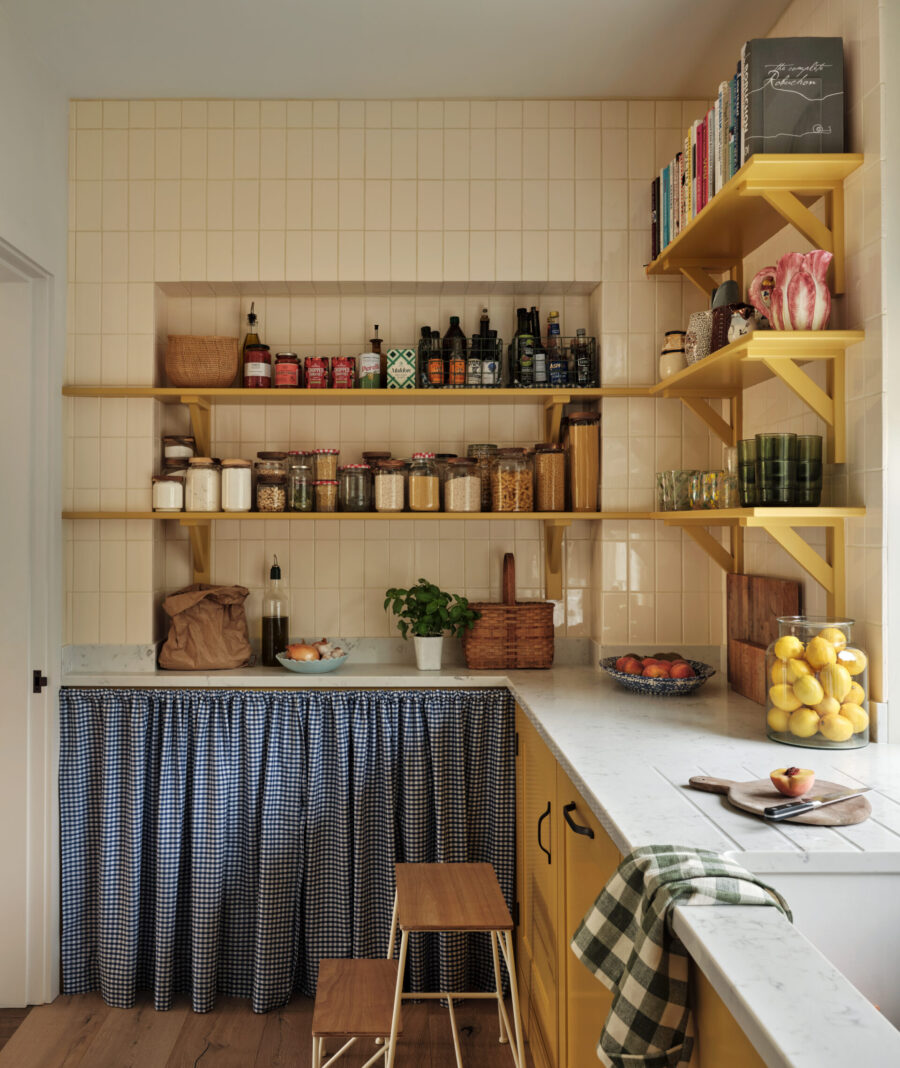
Everyday dry goods: 200 to 250 mm deep suits most UK tins and jars, from 400 g tomatoes to 1 kg sugar bags. Allow 300 mm clear height for tall cereal boxes and pasta jars.
Bulky jars and preserves: 250 to 300 mm works for Kilner style jars without the sensation of things teetering at the edge.
Small appliances: Give 400 to 500 mm depth for mixers, slow cookers and air fryers. A standard stand mixer is roughly 220 mm wide by 360 mm deep by 420 mm high, so plan an adjustable shelf above at 450 to 500 mm but be sure to measure your appliance with any lids up.
Trays and boards: Vertical dividers above a counter need 300 to 350 mm depth; set spacings at 60 to 120 mm depending on your bakeware.
Crates and baskets: Pull out willow or timber crates at 450 to 500 mm depth are excellent for veg and snacks. Ventilating the cabinet base keeps air moving.
We often model shelf spacing around your specific shopping habits if we have that information to hand, and in some cabinetry we are able to make it adjustable so the pantry remains useful as your cooking habits changes over time.
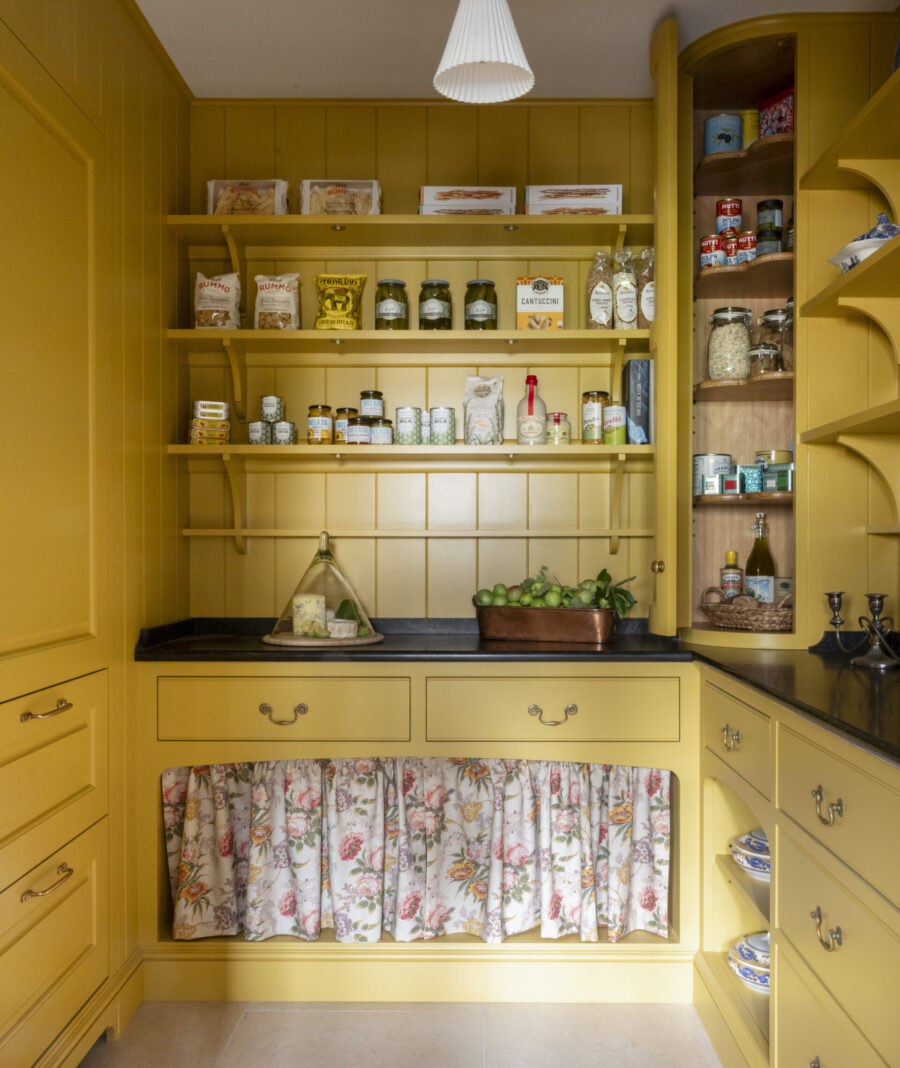
Cool Store Principles, Lighting & Ventilation
A pantry stores food best when it stays cool, dry and dimly lit. Key details make the difference.
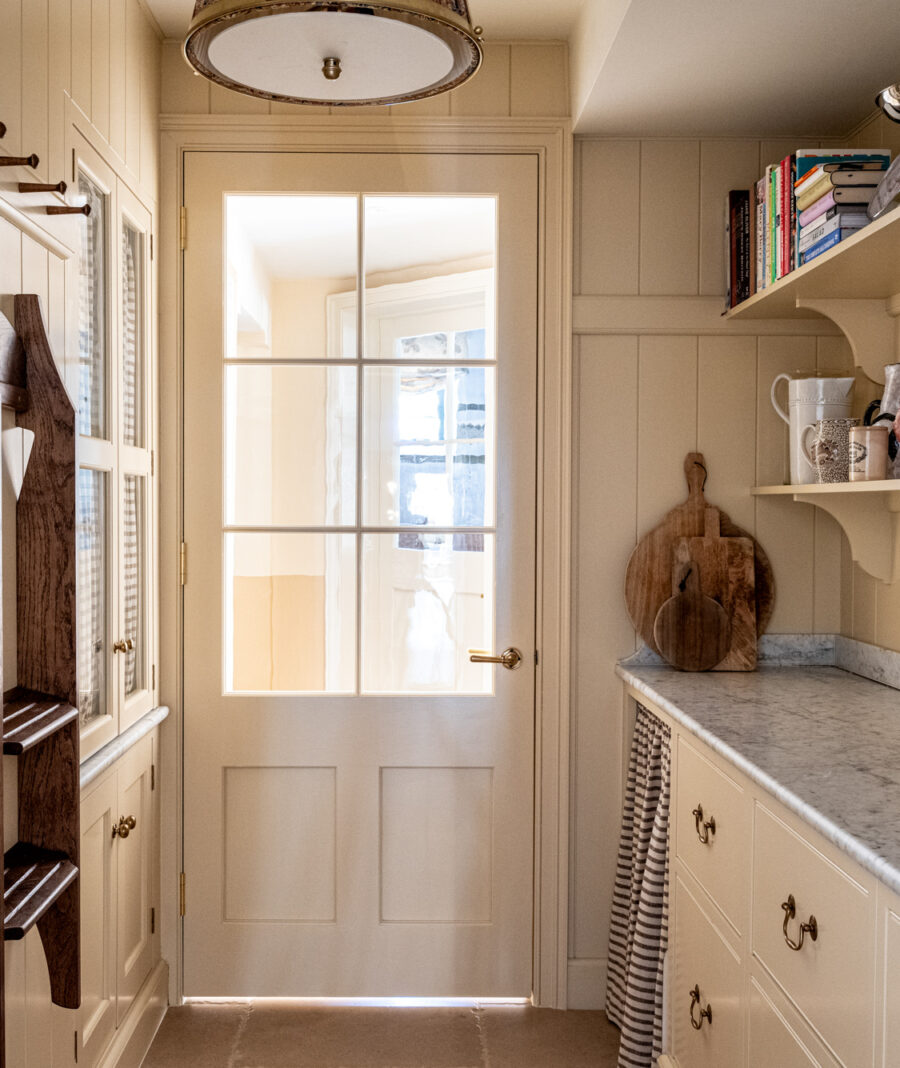
Location: If possible, tuck the pantry on a north or east facing wall (in the northern hemisphere) away from range heat and direct sun. Internal rooms with light borrowed through an internal glazed screen retain a pleasing duskiness without heating the space. Make sure your builder does not put underfloor heating in this area.
Surfaces: Stone such as Carrara marble or Welsh slate holds a gentle chill, useful for staging pastry or resting chocolate work. Timber shelving should be hand painted, or if in hardwood, sealed with a hard lacquer.
Lighting: Fit dimmable, warm white LED strips shielded under shelf lips or within the shelf itself, with high colour rendering for easy reading of labels. Avoid fittings that wash light across dry goods for hours; sometimes it’s worth using an occupancy sensor with a short timeout so lights switch off when you leave.
Ventilation: Passive vent grilles with insect mesh high and low help reduce humidity. In more enclosed pantries, a quiet, humidity triggered extract keeps air sweet without draughts. Slotted shelves or small vent holes at cabinet backs encourage airflow behind jars.
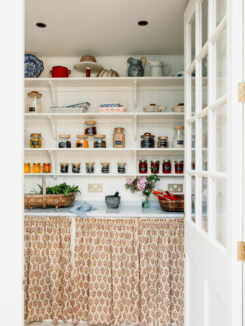
Door treatment: Solid or reeded doors preserve darkness; a glazed pantry door is lovely, but consider a lined curtain or internal blinds if the run gets strong sun.
How A Kitchen Pantry Eases Christmas Hosting
When you are cooking for a crowd, the pantry becomes your backstage. It can:
Stage the bake: Keep flour, sugars, spices and trays in one baking zone, with scales and a stand mixer plugged in and ready. The main kitchen stays clear for savoury prep.
Park appliances: Blenders for gravy, a food processor for stuffing, the slow cooker for braised red cabbage, all run on a dedicated power track in the pantry so worktops outside remain calm.
Hold overflow: Drinks, crisps, and glassware live on upper shelves; a cold slab stages cheese before it reaches the table.
Speed clearing: After lunch, trays and pudding bowls can be stacked on the pantry counter while the dishwasher works through a first pass. You re-emerge to guests and a tidy kitchen.
In short, a well-considered pantry protects the mood of the day. You work efficiently, without the sense of performing every task in front of guests.
Good joinery is the common thread throughout the design of any kitchen pantry. The difference between serviceable storage and a pantry you love is often a few millimetres of shelf depth, a sensitively lit interior and cabinetry designed specifically for your preferred goods.
Bespoke Details That Make Organisation Effortless In Both The Kitchen & The Pantry
Integrated spice drawers: Shallow, full width drawers with removable or shaped dividers keep jars upright and arranged by cuisine type or alphabetical order. Label the top and front so you can read them whether the drawer is open or closed.
Door racks sized to you: Deep rails for oils and vinegars at eye height, shallower ones higher up for baking extracts and salts. We tune rail heights, so labels clear the rail, not hide behind it.
Baking zone: A dedicated section with a cold slab, tray storage and a knee space for the mixer makes pastry less of an event and more of a pleasure.
Small appliance zones: Pocket of bifold doors reveal a worktop with sockets and task lighting; when closed, everything disappears. Cable ports and heat safe backs prevent clutter and scorch.
Quiet waste and recycling: Pull out bins within the pantry spare the main kitchen. Ventilated fronts help with odours.
Hardware that’s a joy to use: Consider aged brass handles from makers such as Armac Martin, chosen for grip as much as beauty.
Choosing & Commissioning Your Kitchen Pantry
Every country house asks for a slightly different answer. A Georgian rectory might welcome a panelled walk-in larder next to a scullery; a London extension may suit a glazed pantry with an internal glazed screen to borrow light. If you are planning a broader kitchen design project and would like a considered, long-lived result, our team designs and makes handmade bespoke kitchens alongside pantries, sculleries and utility rooms, all tuned to your seasonal and everyday rhythm, honouring the principles of estate joinery.
A kitchen pantry is not simply extra shelves. It is a cool, ordered service zone that protects the calm of your kitchen at Christmas and keeps daily cooking easy in the months that follow. Choose the right format for your plan, size shelves to your packaging, protect food with restrained lighting and gentle ventilation, and add the small details that make finding things effortless. With careful planning and well-made furniture, festive overflow becomes everyday ease.