Journal
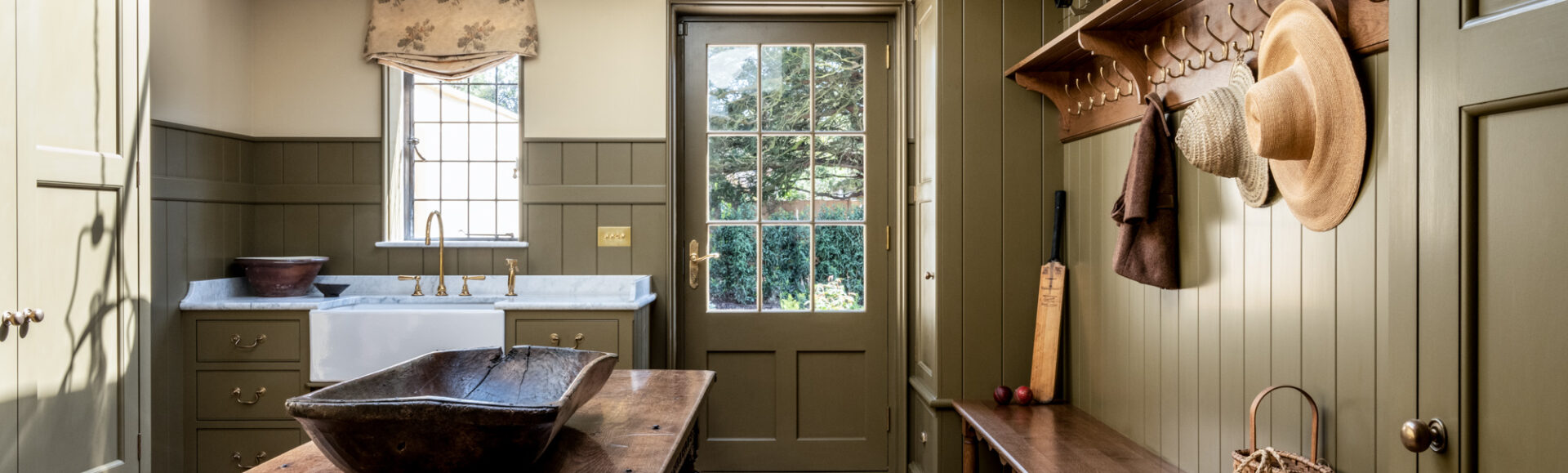
A well planned boot room is the quiet hero of country life
Boot Room Cabinetry To Tame Country Living
November. 2025
Well planned boot room cabinetry is the quiet hero of country life architecture. It swallows wet coats, muddy paws and match day kit so your kitchen remains relatively calm. When designed with thought, a well designed boot room also sets the tone as you cross the threshold from outside to in. This guide shares the specification detail we often specify for our clients.
Historically, the boot room grew from nineteenth and early twentieth century service spaces, where outdoor clothing and tack were stored on stone floors near secondary entrances. These were practical, staff run zones with simple shelving, pegs and sluices, separated from family rooms. Today, the boot room is reinterpreted as a welcoming entry which protects the house, supports family life, and does its hardworking job to organise visual clutter.
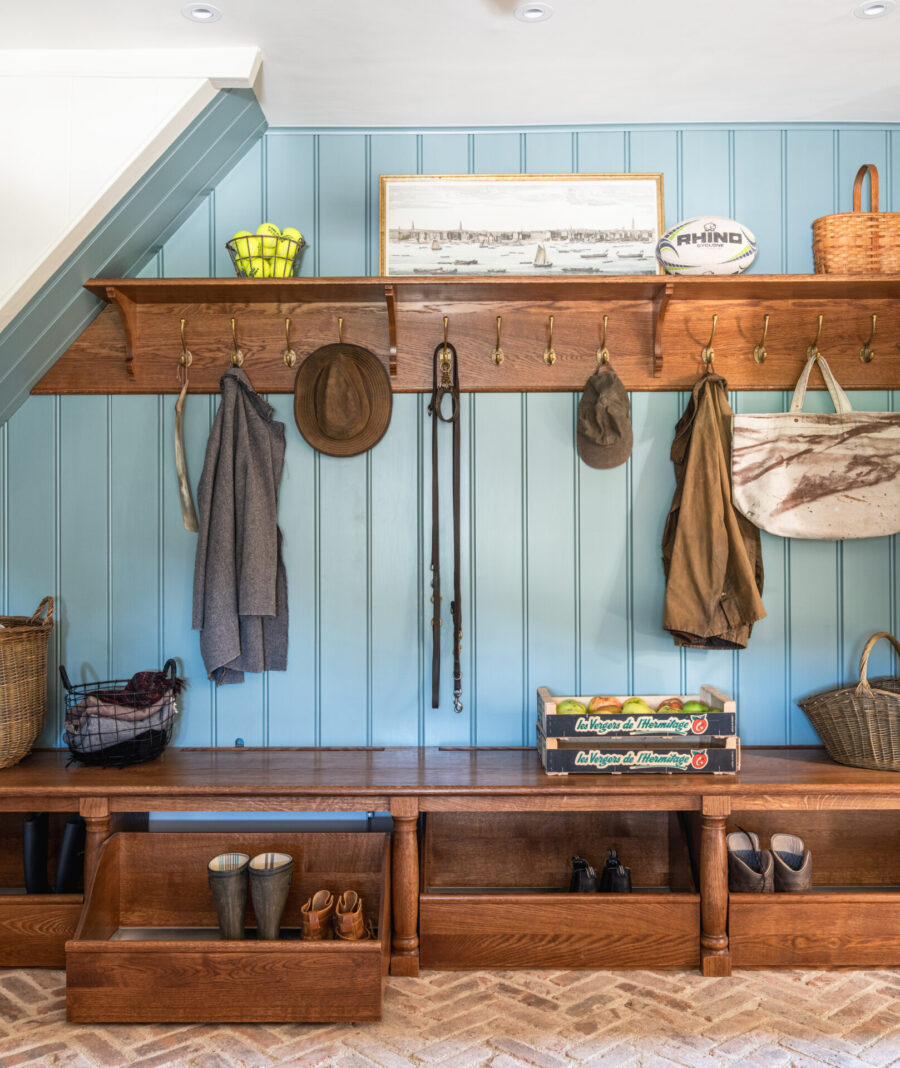
What To Store In Boot Room Cabinetry & How To Make It Effortless
A good boot room puts every regular item to hand while hiding bulk and mess. Plan for:
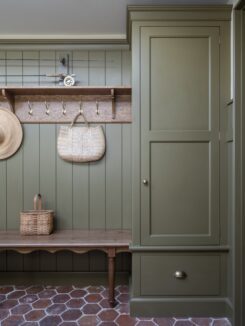
- Tall cabinets for coats and school blazers, with slotted panels or ventilation holes to encourage air flow.
- Slatted shoe racks sized to your footwear, with a slight rake so pairs sit neatly and dry quickly.
- Deep drawers for scarves, pet leads and hats, lined with washable mats or removable trays.
- Open cubbies labelled for each person to cut morning search time and speed up the morning school rush.
- A bench at the right height, typically 450 to 480 mm, with boot pull and integrated storage below.
- Oversize pegs or rails for rucksacks and sports bags, spaced generously.
- A tall cabinet for brooms, cricket bats or gun slips where appropriate, with lockable hardware.
- Suitable drainage (often in the centre of the floor) in which to wash down mud.
Well designed bespoke boot room cabinetry far outperforms the piecemeal row of hooks, because everything can be considered, not just hanging space. Well placed drainage provides a place to get rid of mud, cleveryl located radiators dry wet coats, doors hide messy sports kit and hidden trays catch drips. The intelligently considered boot room then reads as a working part of the house, rather than just an afterthought.
Kate Lawrence Parr - Senior furniture designer
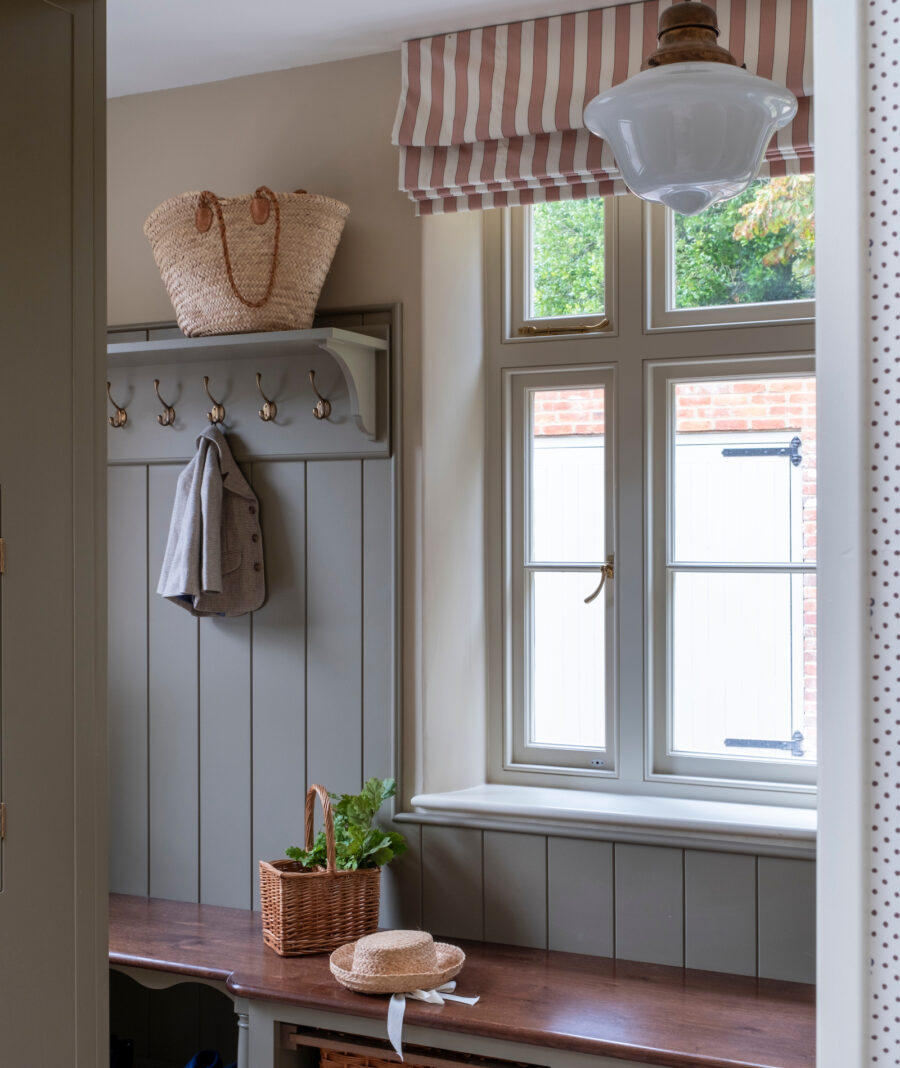
Boot Room Cabinetry Finishes That Thrive On Mud & Moisture
Materials and surfaces have to take the hit and clean up well. The Guild Anderson design team often specify:
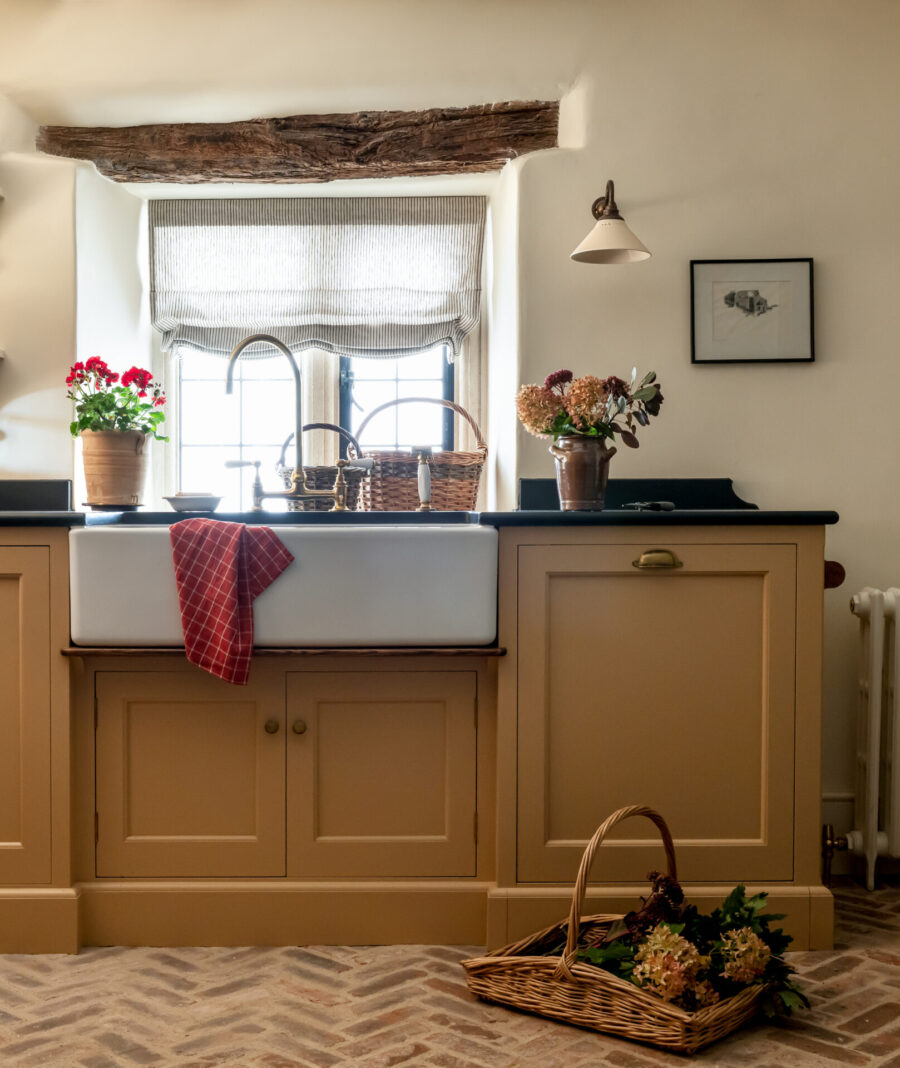
Flooring: quarry tile, brick pavers or honed stone with a fall to a linear drain by the exterior door. We usually allow for a generous coir mat set flush into the floor.
Drainage: if dogs or heavy gardening are part of family life, plan an internal gulley and easy hose access.
Worktops: Welsh slate, granite or teak. Stainless steel in a dog wash zone if you want indestructible practicality, or even a bespoke dog washing station if budget allows.
Paint: wipeable, scrubbable formulations expertly applied by hand for depth of colour. Where impact is likely, consider half height painted panelling with a tougher finish.
Hardware: solid brass that will patinate gracefully. We often use Armac Martin for its finish options.
Metalwork: boot scrapers, kick plates and under bench grilles in aged brass or bronze to take knocks without looking tired.
If your kitchen has hand painted kitchen cabinets, echo the tone for the boot room cabinetry for continuity, or choose a deeper shade to anchor the threshold.
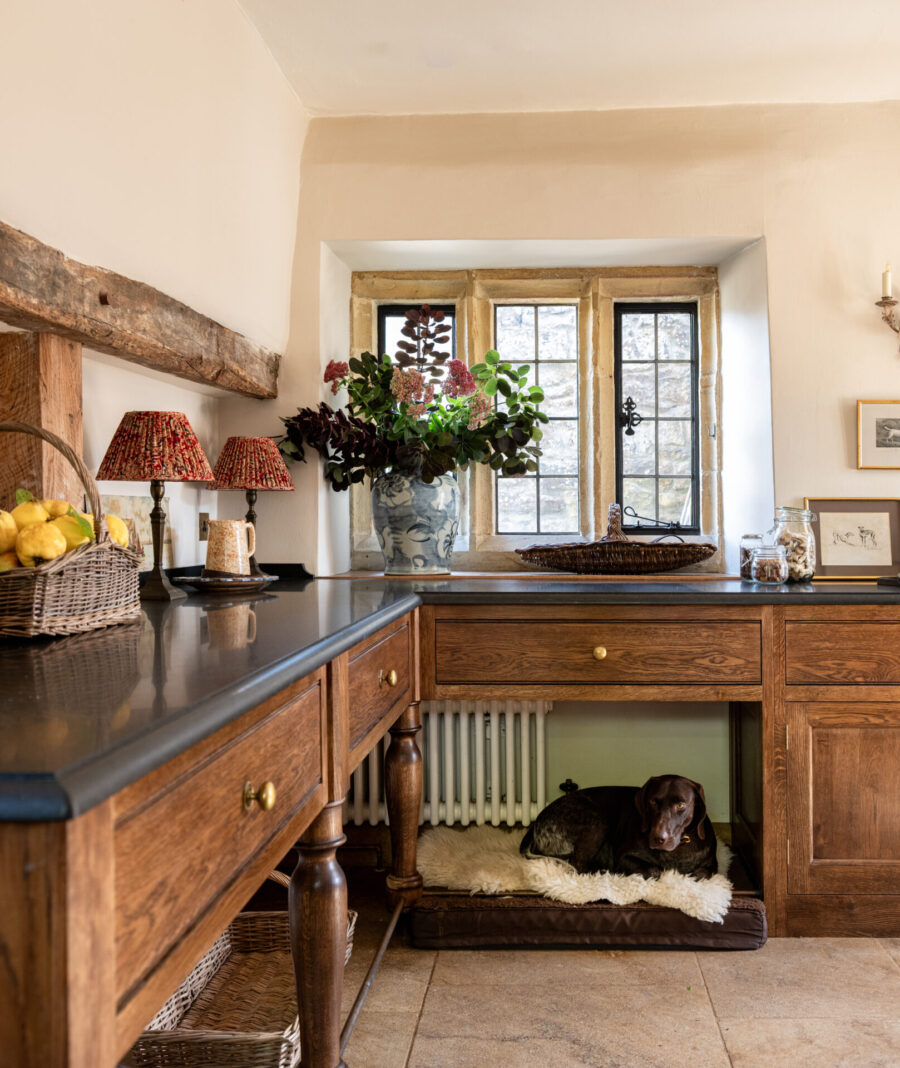
Planning For Dogs, Sports Kit & The Seasons
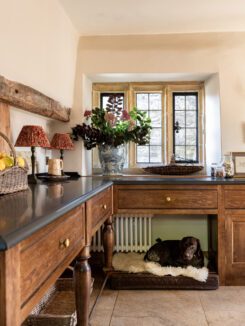
Dogs: consider a raised dog shower with a thermostatic mixer located away from the water jet, handheld rinse and a lip in the tray to contain splashes. A grippy floor and a tether point help. Include a ventilated crate sized to your pet, storage for food bins and a hook for dog leads by the exit. We design specific dog rooms which function beautifully for your four legged friends.
Sports kit: use tall ventilated lockers for pads and helmets, plus a drying rail over a heating grille or radiator. Alternatively a Podab Drying Cabinet will dry clothes, shoes & more in less than 40 minutes. Perforated shelves and a boot dryer in a powered drawer also make a big difference on wet Saturdays.
Seasons: fit adjustable shelves and high level storage. A blanket drawer near the door is surprisingly useful. If shooting or riding is part of your year, a lockable cabinet keeps gear tidy and safe.
Work out your family’s daily routines when you brief the design. Where do parcels land?, where do keys live?, who returns last at night? Bespoke planning is personal; it should feel as if the room already knows your habits.
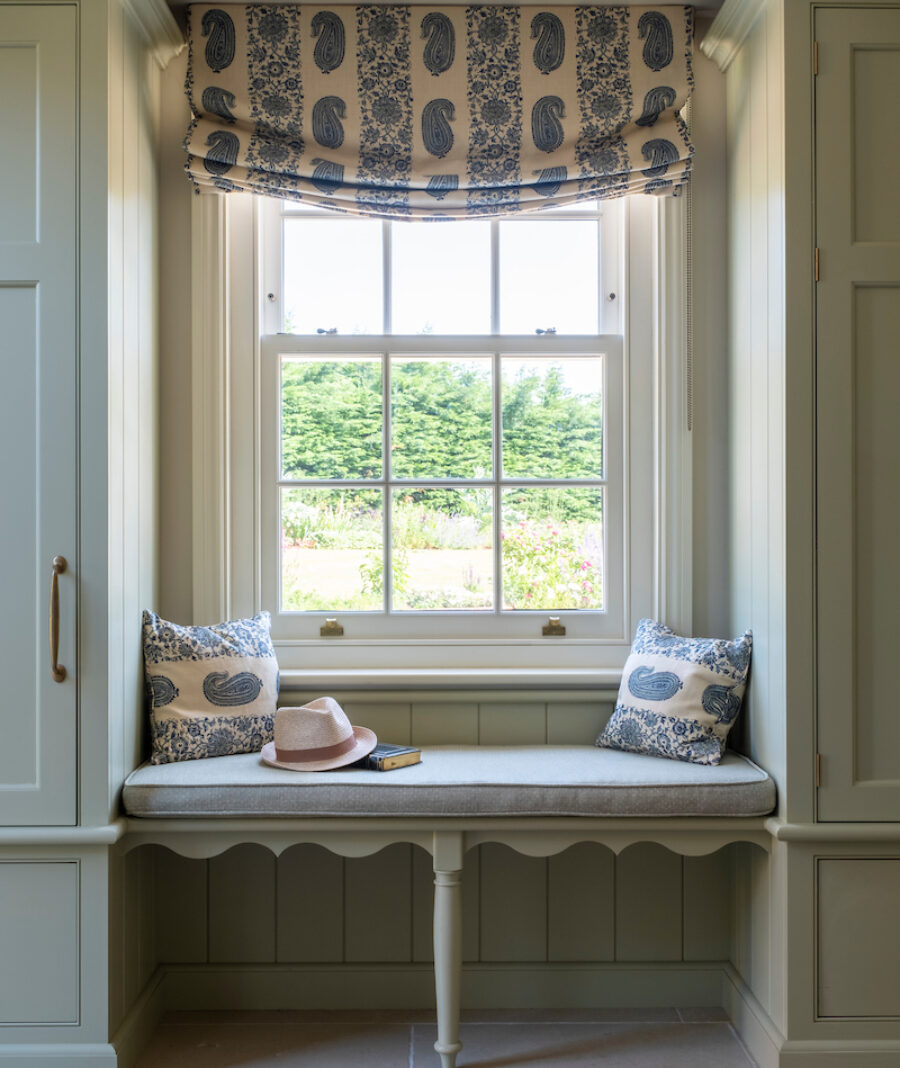
Elegant Boot Room Layouts Which Suit Different Houses
Country House entrance: a long wall of framed cupboards with central bench, shoe racks beneath and tall lockers either side. Opposite, a dog wash and slate worktop for potting. Brick or quarry tile floor with set in coir at the door.
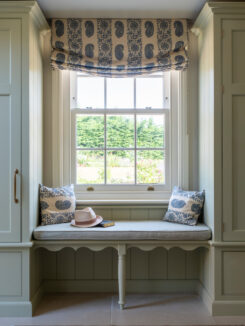
Old Rectory side hall: taller ceilings invite full height cabinetry with a glazed top section for baskets. A window seat becomes the bench; drawers slide under.
London Townhouse return: even 1.2 metres of depth can feel like a boot room with a shallow bench, overhead cubbies and closed base storage. Use pocket doors to avoid clashes, mirror to lift light and a flush floor mat to trap grit. Yes, a compact London hallway can gain a bespoke boot room feel, if every millimetre works hard and visual clutter is screened.
In all cases, proportions, cornice lines and panelling should be tuned to the architecture so the room belongs to the house.
Why Bespoke Boot Room Cabinetry Earns Its Keep
Off the shelf benches and rails solve part of the problem but rarely handle the whole. With bespoke boot room cabinetry you set the heights, depths and clearances to suit your coats, your ceiling line and the exact swing of your door.
You can integrate drainage, power, heating grilles and service access neatly. Ventilation can be engineered in. Hardware is chosen for hand feel and longevity.
Guild Anderson approach boot room cabinetry as finely made furniture, planned around real family routines and built to last. It is the same principle we apply to all our bespoke cabinetry and throughout our work in homes of all sizes.