Kitchen Scullery Buscot Park
OXFORDSHIRE
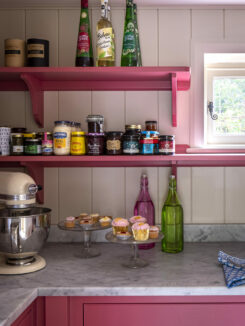
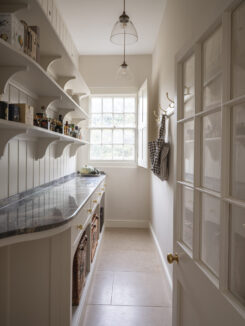
Being commissioned to re-design a bespoke kitchen scullery for a National Trust house was a great privilege for the Guild Anderson design team. This particular kitchen pantry also acted as a scullery and servery which adjoins the main kitchen at Buscot and hadn’t been touched since the 1940s.
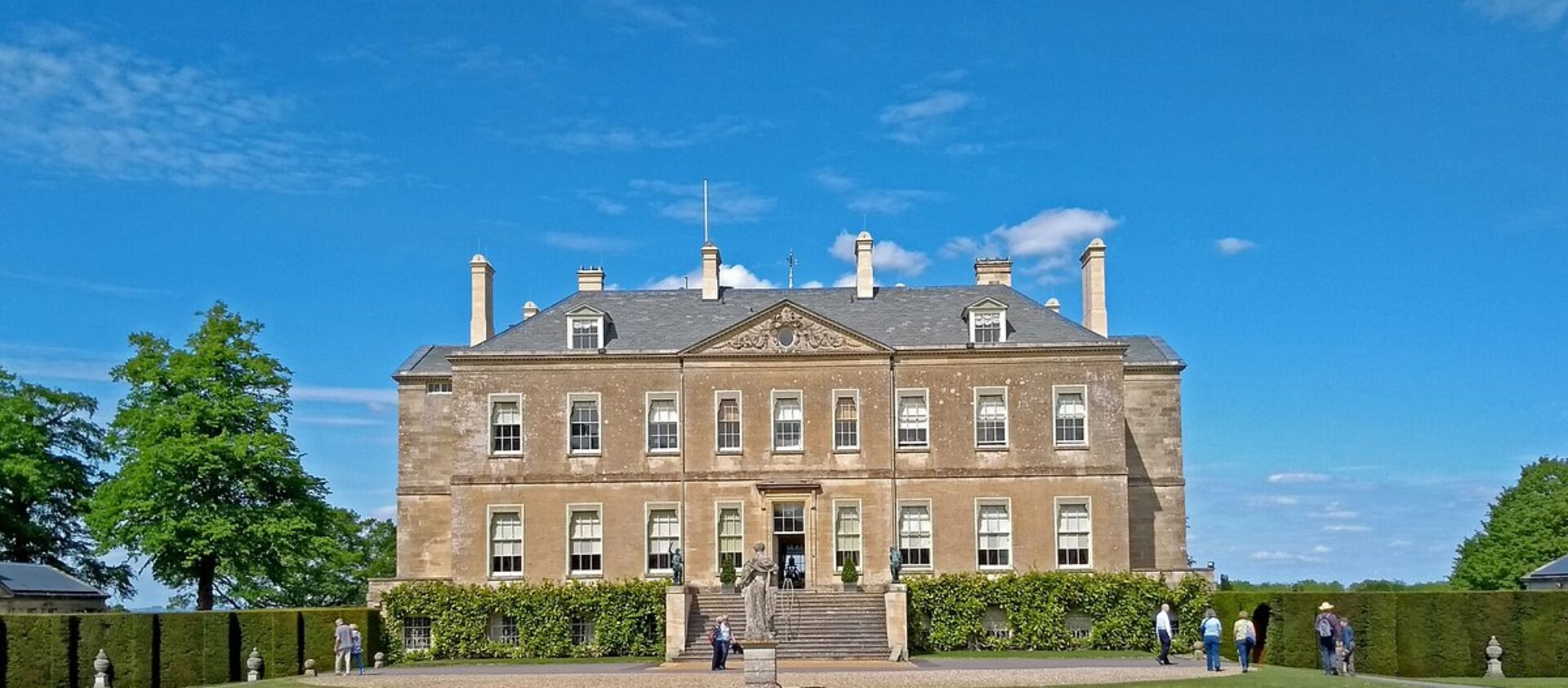
Buscot Park is a Grade II* listed neoclassical house built in the late 1700’s. The house sits in breathtaking landscape was bequeathed to the National Trust in 1956. During the pre-war years, the domestic spaces and back of house rooms in large houses like Buscot Park would have been frenetic spaces, very busy with butler’s, under butler’s, cooks, maids and other staff. Working rooms like the pantry would have seen a lot of activity; far more than most large houses of this type see today.
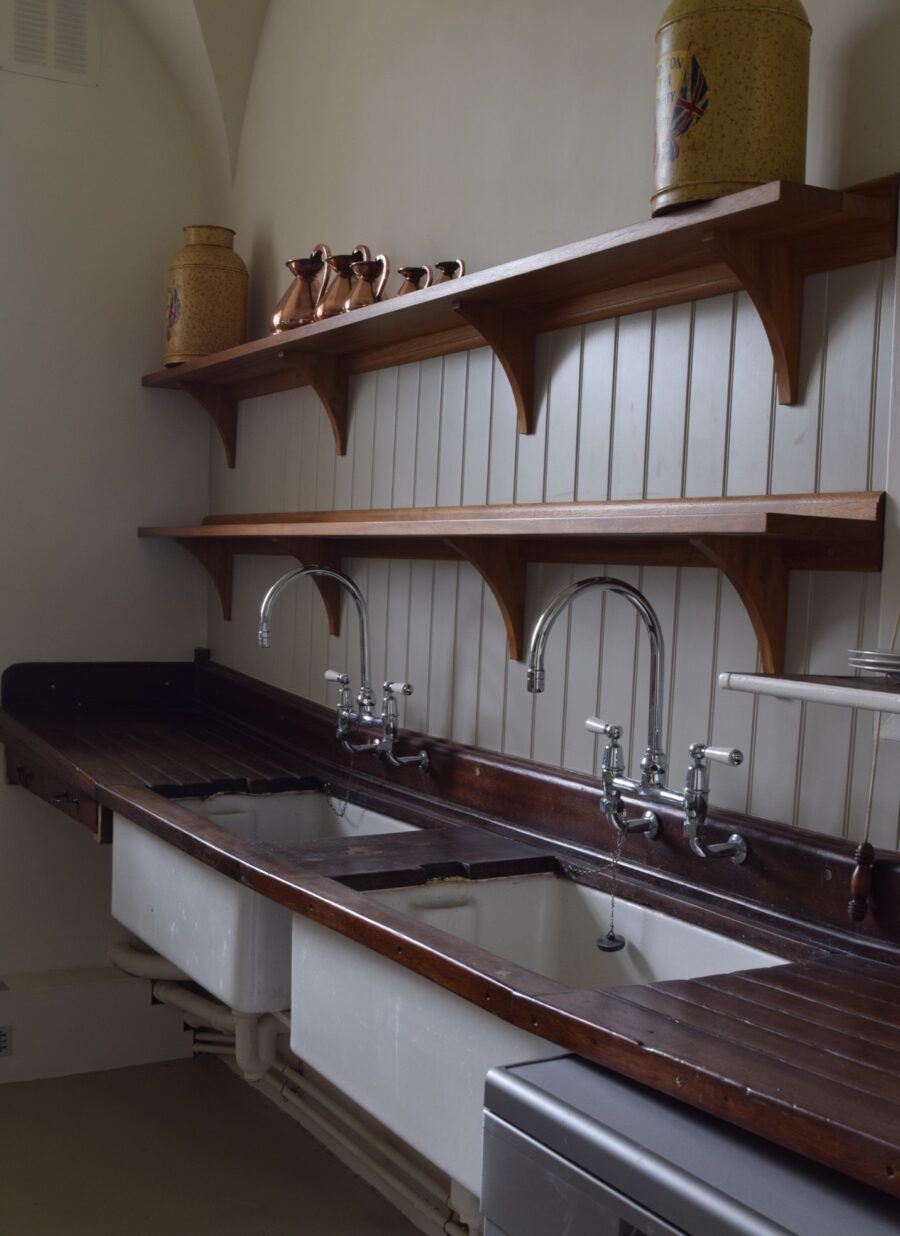
Our light touch renovation meant keeping much of the original work
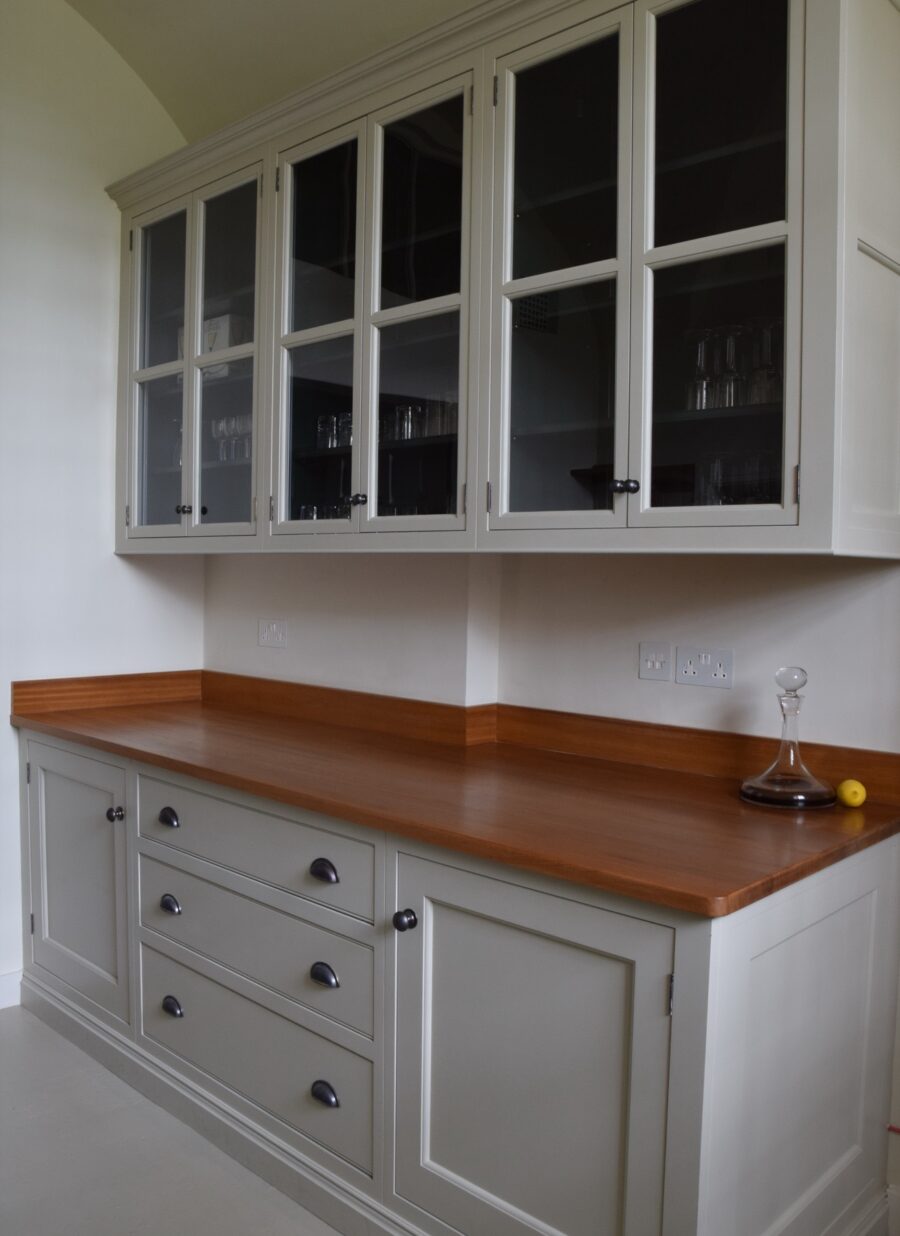
The servery element of the bespoke kitchen scullery
A LIGHT TOUCH KEEPS CHARACTER
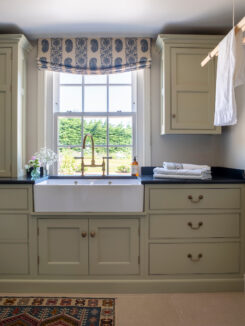
Despite looking a little dated, we took the decision to retain the two original Butler’s sinks. They were in perfectly good order. We also decided to retain the beautiful, original teak top which had considerable patina. Keeping these original items enhanced the character which would have been costly to replicate. Our light touch renovation involved designing a panelled wall and shelves for the scullery, along with a glazed servery.
A good kitchen scullery design does not have to be complicated; quite the opposite in fact. There are some key areas to focus on. First is convenience. A kitchen scullery should really be located near to where the kitchen is. Second is accessibility. It should be easy to access items without having to move other items around. This means that visibility is important and the key reason why many pantries have open shelves or glazed doors.